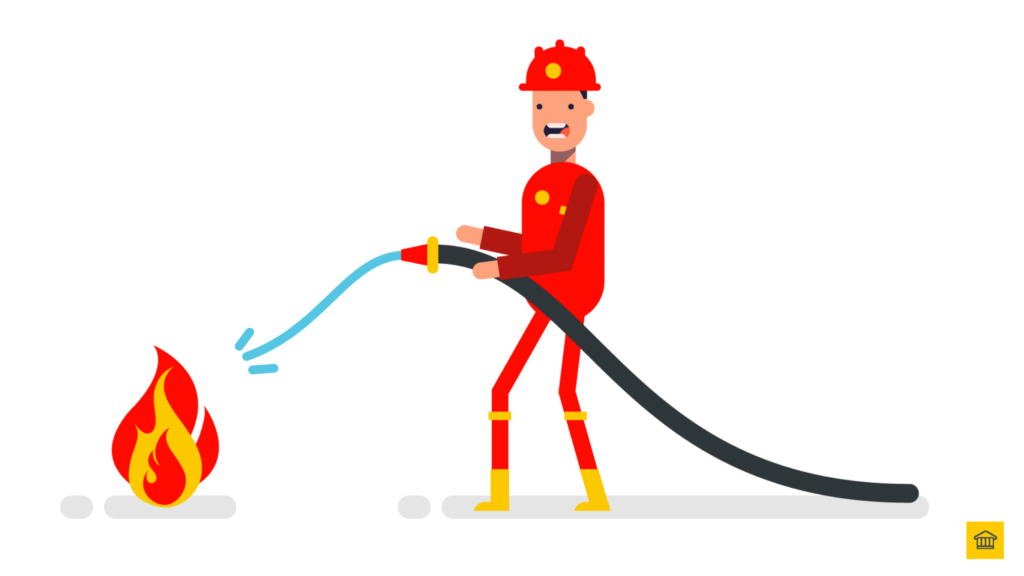
Welcome to our insightful blog post, “4 Reasons Not To Be a Business Transformator”.
This post explores the complexities and challenges associated with the role of a Business Transformator.
We delve into the multifaceted responsibilities that this role entails, and the reasons why these challenges might deter individuals from pursuing this career path.
Additionally, we discuss the high failure rate in business and digital transformation projects, attributing it largely to inadequate planning.
We also emphasise the importance of a people-centric approach in successful business transformations, underscoring the idea that people, rather than technology alone, drive successful transformation.
In the sections that follow, we delve deeper into these topics, shedding light on the challenges and reasons behind the high failure rate in business transformations.
Our goal is to challenge the status quo and address the often overlooked problems in the business transformation industry.
Join us as we navigate the intricacies of being a Business Transformator and its implications on businesses and their transformation initiatives.
Heres what we’ll cover (click the links to skip to the section below):
NB – Click to expand images 📸
Business Transformation and Business Architecture is really hot right now.
In a recent post, 70% of C-Suite executives stated that Business Architecture was the key to their Business Transformation success, led by Business Architects (we call Business Transformers — because a Business Transformator is part-strategist, part-designer, part-collaborator and part-negotiator, who have moved beyond just design, and includes oversight of implementation, stakeholder management, coordination and negotiation).
If you’ve worked on strategy development or strategy implementation and ensured that they’re aligned with the businesses’ design and technology — then you’re probably a Business Transformator.
Business Transformators are people who transform the business, but would you want to be a Business Transformator?
The Business Transformator is often the hero, who comes in to save the day (or programme, but mostly the business transformation from certain failure), but it is not without its challenges.
As a Business Transformator you are required to wear different hats:
- A Fireman hat,
- A Policeman hat,
- An Architect hat, and
- A Coach hat.
In this post, we will discuss the four (4) reasons (and different hats) why not to be a Business Transformator.

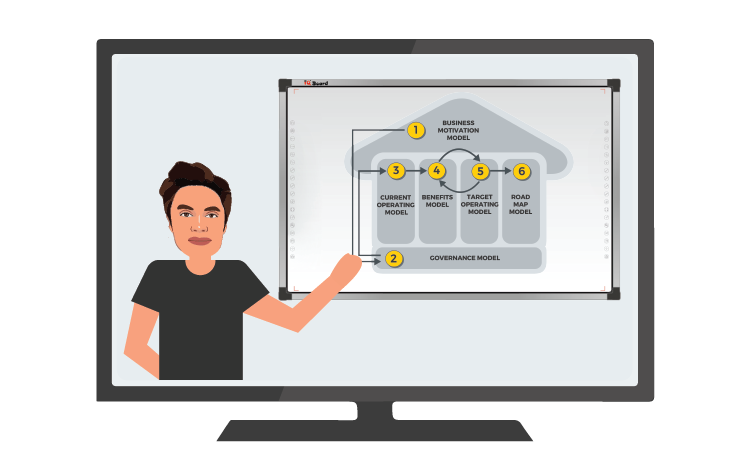
6-Steps to Business Transformation Success
WHAT THE TOP 30% OF ORGANISATIONS KNOW THAT YOU DON’T 👉

🚀 "If you’ve worked on strategy development or strategy implementation and ensured that they’re aligned with the businesses’ design and technology — then you’re probably a Business Transformator" 🌟🏆 #BusinessTransformator #HOBA #BusinessTransformation
Heath Gascoigne Tweet
The Fireman
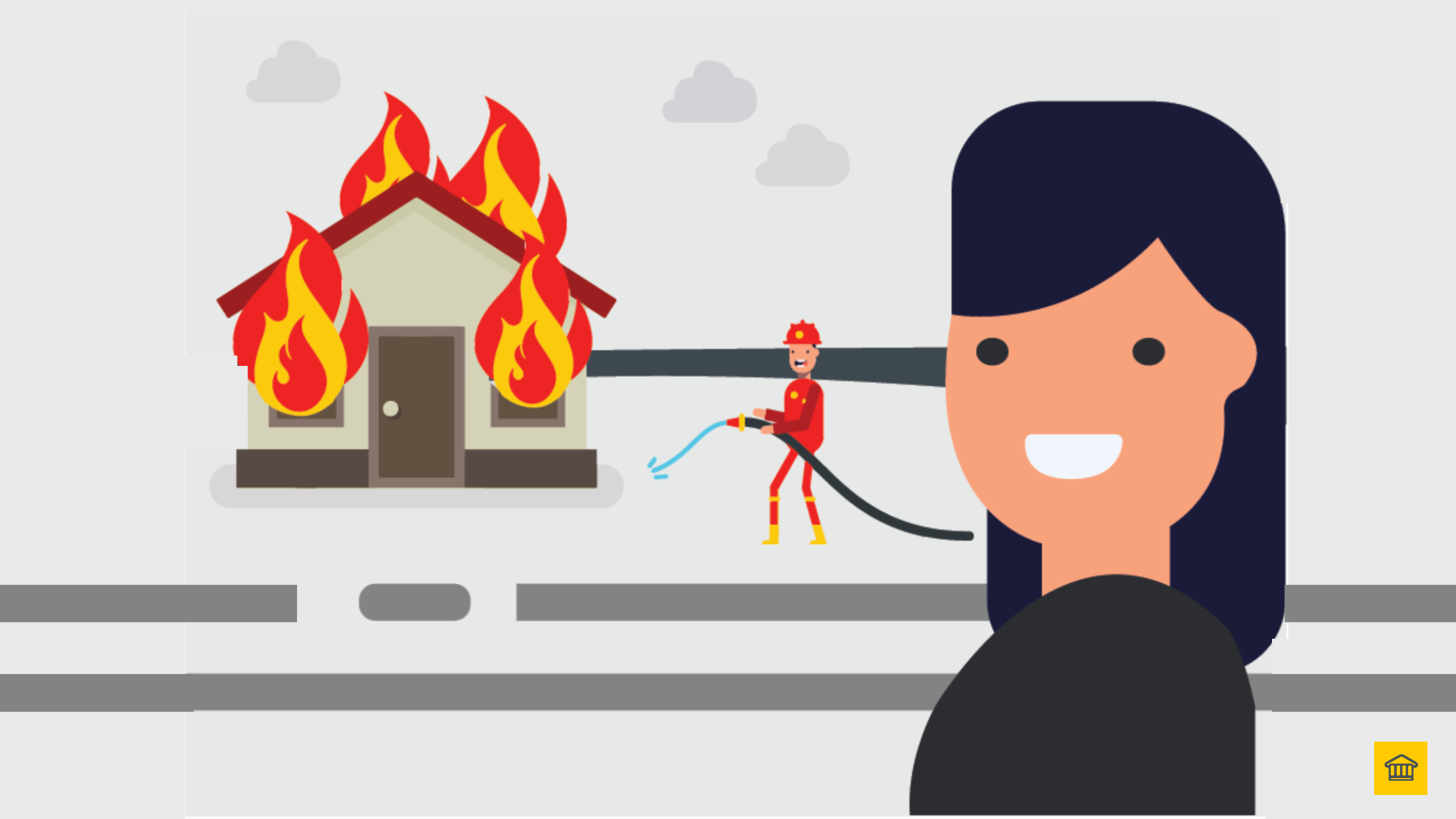
The first hat the Business Transformator wears is the Fireman hat.
As a Fireman, the Business Architect puts out the fires. We not talking about the ‘burning platform’ fires — that elusive metaphor that was originally a change management analogy intended to emphasis the need or driver for change.
The ‘Burning Platform’ was taken by CTOs, CIOs and Technology Stakeholders and suppliers and took it out of context, and adopted it as their №1 sales tool, which would later prove to drive an emotional response and therefore sales for their new and often unproven, and unneeded technology.
To be a Fireman in Business Transformation (as in the ‘real’ sense of the word and job), requires a level of bravery and gravitas.
🚨 "To be a Fireman in Business Transformation (as in the ‘real’ sense of the word and job), requires a level of bravery and gravitas." 🚗 🎯 #BusinessTransformator #BusinessTransformation
Heath Gascoigne Tweet
Bravery
Bravery is required in Business Transformation as it is for fighting fires in real life.
In our experience, being engaged and getting called in to rescue the programme that has been operating (or burning) for 6–12 months, and sometimes 2-years by the time we get called.
The programme is nearly at the end of the original delivery date, it is behind schedule, under scoped and just about out of budget.
The Business Transformators job at this point is to put out the fires — there is no time to waste (time has already been wasted). It is time to cut through the noise, align the programme and get it delivering.
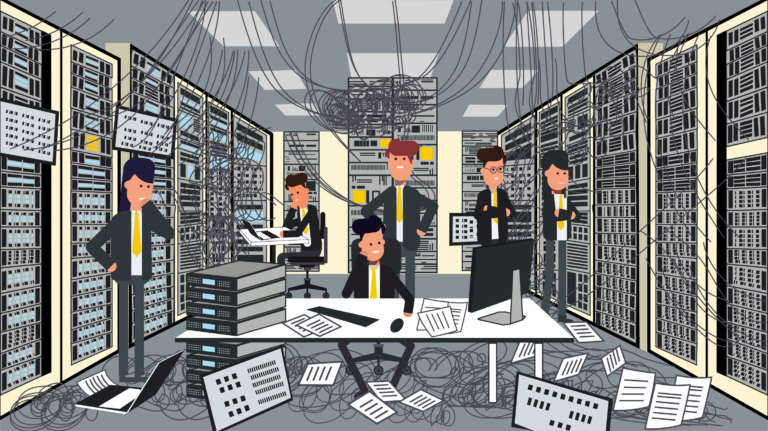
What is happening on the programme however, is the programme (and programme team members) are busy, but its ‘busy-being-busy’ — like moving the deck chairs on the Titanic, confusing ‘being busy’ for ‘being productive’.
By the time we arrive on scene, despite Technology stakeholders being busy, the Business stakeholders have almost but fully disengaged, being dictated to by Technology, the last thing they want to hear is “stop, wrong forest” (for those that reminder those cartoons).
There’s two (2) things that happen when joining a programme late and telling the programme ‘you can’t see the forest for the trees’ or ‘you are in the wrong forest’.
The immediate reaction is one or two things:
- Nothing — although they are out of time, under-scope and out of budget — clearly not working on the right things, or in the right order, they say “leave us alone, can’t you see we’re busy”, or
- Resistance — shown by the immediate questioning — Who are you? Why should we listen to you, and why — what you are proposing is any different to the 5 guys that were here before?
It is at this point, you earn your stripes providing clear direction, organisation and structure to get the programme out of the fire, and start delivering — working on the right things, in the right order, despite the objections and push back you get.
To do this, despite the opposition, you need Gravitas.
Gravitas
The next element of being a Firefighter requires Gravitas.
Gravitas is needed in two areas:
- First — to build relationships and rapport quickly with all members ‘on the programme’ (and Organisation), particularly influential impacted stakeholders external ‘off the programme’, who have the power to delay or stop your programme; and
- Second — gravitas is needed to understand these key stakeholders needs and concerns and put an approach together to develop the Target Operating Model (TOM) and roadmap for implementation that addresses their needs and concerns and defend it.
This approach needs to show how the design and physical changes are developed and implemented in the most cost and risk effective manner, and most importantly stand behind your approach and recommendation.
This also includes being open to challenge, criticism and feedback, and to defend it to the various stakeholders, boards and board members that it is the best for the programme and the greater good for the Organisation.
The Policeman

The second hat the Business Transformator wears is the Policeman hat.
The Policeman’s job is real life is to keep the peace and harmony for the greater good of the community.
In the case of the Business Transformator on a Business Transformation — particularly one that is behind time, under delivered and (or just about) out of budget, it is keep the peace, and keep it on track to deliver what can be salvaged with the time, budget and resources available.
In these ‘pressure cooker’ situations (running out of time and money), there are two types of stakeholders that are still on the programme that have a hope that it can still deliver all or some of the intended outcomes of the programmes in the last (and dying) moments.
These stakeholders are either:
- 1) Open — to the idea that given the current state of the programme and business transformation, what they have tried (or been forced on them, often in a technology-not-business driven approach), reserved in the knowledge that they are not going to achieve the originally planned milestones and deliverables, they have put aside their need to defend their ‘empires’, and for the greater good of the Organisation are open to explore new and fresh ideas, that can : ‘at best’ — provide a new approach to deliver the original outcomes, or ‘at worse’ — deliver a scaled down scope and deliverables in the remaining time; or
- 2) Closed — off to any changes to the original approach and intended programme outcomes, deliverables and milestones, that they defend any changes like they are defending an empire (because in some cases they are), in hope (or fear) that all of some of the intended the outcomes can still be delivered, and some form of the programme can be salvaged (despite the reality being like moving the deck chairs on the Titanic).
The ‘Open’ stakeholder in this situation is the ideal stakeholder, willing to put aside their individual objectives but work and pull together to deliver what can be delivered from the transformation requiring less ‘policing’, but it is the Closed stakeholder that requires close attention.
The close attention the ‘Closed’ stakeholder needs, is equivalent to the stakeholder in ‘monitor’ quadrant of the stakeholder impact/influence matrix — low impact, but high influence that if not monitored can derail the programme and transformation efforts.
The way to monitor (and manage) these stakeholders to by rules and principles.
How I personally manage these stakeholders is, despite agreeing to and signing off the various artefacts and deliverables, and mainly the governance framework — is to print the draft and final versions of all the business transformation documentation.
What this means is printing the signed off approved versions, and taking to these to meetings in my A4 ring binder folder (NB — Yes, this not very eco-friendly, but the cost of printing paper is soon justified against the cost of the programme wasting 100’s of thousands of dollars, and sometimes millions of dollars and not realising any tangible benefits, printing justifies the ‘means to the end’), and at the outset of every meeting remind the room and meeting what has been agreed so far, and what this group has agreed too, namely the following deliverables:
- The Vision, Strategy, Objectives and Measures (VSOM) — so we’re all clear what the end goal looks like;
- The Governance Framework — how requirements are managed and approved,
- Design Principles — what is in scope, and why,
- RACI — who’s involved in decisions, and
- RAIDs — how these are captured and managed.
When questioned and challenged — mostly by the Closed group, I pull out my folder and remind them, “this is what has been agreed”, and mostly importantly “this is what this group approved”.
What happens in the ‘heat of the moment’ people forget, even recent history of what decisions have been made, and why.
Producing the physical copy (seems to have more impact than showing or projecting a screen of the same document, you can pass it around, as they often ask to see it and read it close up, they can touch it and feel it and as it becomes more ‘real’) which acts as a reminder, and ‘quietens the noise’ (the challenge, which would later prove to just be distractions or delay tactics — not to make a decision, or progress the programme).
Looking to transform your Organisation with less stress & less time? Search no more!
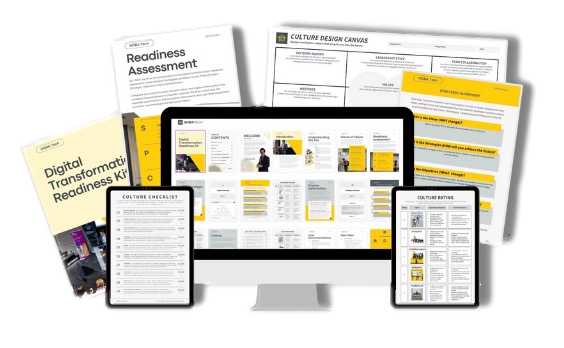
- Introductory Offer
- Huge Savings. On Sale Now!
🎯 "Tired of the high failure rate in business transformation projects? The HOBA method is the solution! Our people-centric approach and evolved framework adapt to the changing landscape of business transformation" 🌐🔄 #HOBA #DigitalTransformation
Heath Gascoigne Tweet
The Architect

As the Architect, the Business Transformator’s role is to design the Target Operating Model (TOM) that enables the business to execute its business transformation.
As the Architect, the Business Transformator is the Designer, coming up, through consultation with the Business and their ideas together to develop both the design of organisations TOM, as well as — the overlooked part of this role, overseeing the implementation of the physical architecture, to ensure it is aligned to the Design.
What usually happens in practice, is the Business Transformator is tasked with the Design only, and effectively hands it ‘over the fence’ to the Business to implement.
The Business Transformator has two (2) roles in wearing The Architect hat:
– Design Owner, and
– Design Steward.
- Design Owner - As a Design Owner, the Business Transformator works in consultation with the Business to develop and deliver the design — in the Discovery and Design phases of the programme.
- Design Steward - As a Design Steward, the Business Transformators role changes from ‘design owner’ to ‘design steward’ and oversees the implementation of the ‘physical’ architecture (the people, process and technology changes) that they align to the ‘design’ in the Build and Deliver phases of the programme.
What usually happens, in these ‘heat of the moment’ states of troubled programmes, despite what was agreed and documented, the programme doesn’t deliver to what was agreed (which is why and how they fail), the Business Transformator with their Architect hat on, is there to oversee the physical implementation that it aligns to the Design.
The Coach

The fourth hat the Business Transformator wears is The Coach hat.
As a Coach, the Business Transformator coaches the programme, through directly coaching the Core Team.
Long lasting effective change only happens when you teach the organisation how to change.
The forgotten issue with Business Transformation today, is Business Transformation is not a one-off event. Industries are constantly changing and evolving. Who was the market leader and dominating one year (or decade) is gone the next? Look at Nokia for example.
The key to Business Transformation and the Business Transformator, is coaching the Organisation through the change, and passing on the knowledge (and skills) so they can do it again themselves next time.
This is the difference between ‘giving a man a fish and teaching him to fish’.
Effective change only happens when you take the Organisation on the change journey with you, as opposed to forcing the change on them (the Organisation).
What happens in the former (give a fish) is you are effectively not laying your cards on the table to the Organisation, and they sense (or think) that you are hiding something, that there is a ‘trick up your sleeve’ that you will pull out later down the track that will come back and bite the Client, when they least expect it or want it.
What happens in these situations is the Client detects this and is hesitant and reluctant to reveal too much information, they only reveal ‘half the requirements’, that the Business Transformator, and the Business Transformation was actually doomed from the beginning.
What happens in the latter (tech to fish) is… you empower the staff, to take control, and own the decisions, that they have both an emotional and intellectual stake in the outcome of the Business Transformation.
By coaching the Core Team — they act like and become champions for the change. They become the spokespeople for the programme and to the rest of the Organisation.
Now, because they are from the ‘Business’ (as opposed from an external Consultancy, in most cases being dictated to, not consulted with), they are seen by the rest of the Organisation as “one of us”, which results in increased stakeholder buy-in, reduced change inertia and resistance, and builds momentum, adaptation and acceptance for the change.
If you are up for wearing all the hats of the Business Transformator, welcome to the Team 😀
Looking for the Best Training to deliver your Business Transformation? Search no more!
- 30-Day Money-Back Guarantee
- Risk FREE

🔥 "Don the hat of a successful Business Transformator with HOBA training! We equip you with the tools to navigate the complexities of business transformation and lead your organization to success" 🎩🔝 #HOBA #BusinessTransformator
Heath Gascoigne Tweet
Conclusion
In our exploration of the “4 Reasons Not To Be a Business Transformator”, we’ve delved into the challenges and reasons why one might hesitate to take on this role.
We’ve highlighted the different hats a Business Transformator is required to wear and the difficulties associated with the role.
We’ve also touched upon the high failure rate of business transformation and digital transformation projects, emphasising the need to address the problems in business transformation that are often overlooked.
Furthermore, we’ve emphasized the shift of focus towards a more people-centric approach in successful business transformations.
The role of a Business Transformator is not for the faint-hearted. It requires resilience, adaptability, and a deep understanding of both people and processes. However, with the right approach and mindset, it can lead to successful business transformations that are sustainable and beneficial for all stakeholders.
Learn More and Contact Us
Interested in learning more about the role of a Business Transformator and how it can benefit your organization? Visit our website to learn more about HOBA TECH and our approach to business transformation.
If you’re facing challenges in your business transformation journey and need expert guidance, don’t hesitate to contact us. Our team of experienced professionals is ready to help you navigate the complexities of business transformation and guide you towards success.
Hope you found a lot of value in this, thanks for reading!
Sincerly,
Heath Gascoigne
P.S. If you want to join our Business Transformator community of like-minded Business Transformators, join the community on the Business Transformator Facebook Group here.
P.P.S. If you want to learn more about business transformation, check out The Business Transformation Playbook here.
For more information, visit https://www.hoba.tech