⚠️The Harsh Reality of AI Transformation
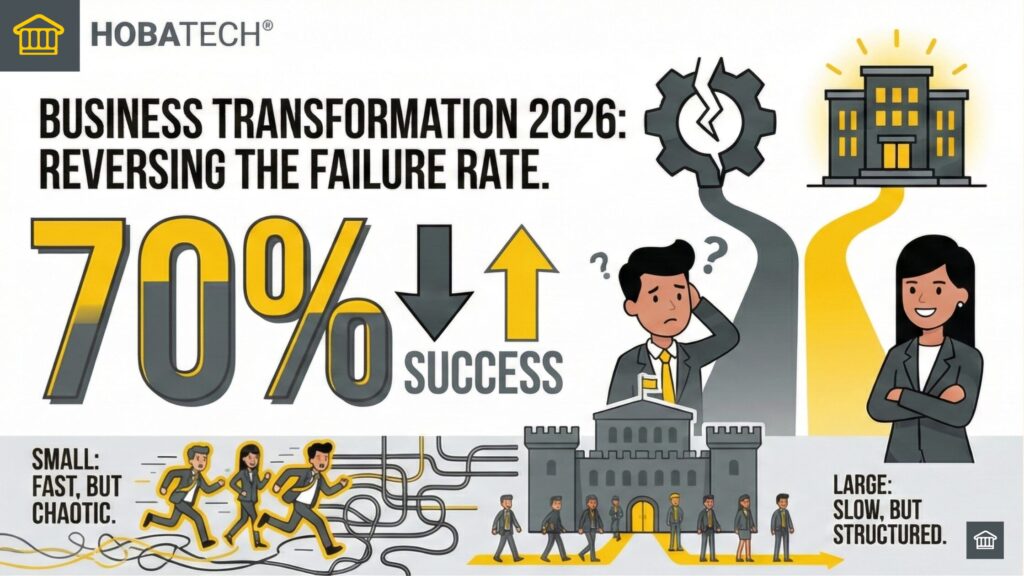
The stakes have never been higher for business transformation in 2026. Yet the data tells a sobering story: not only will 70% of transformation initiatives continue to fail, but without a fundamental shift in how companies approach change, that failure rate is likely to accelerate.
In this post, we break down eight critical predictions that will shape enterprise transformation over the next year—from the intensifying AI-induced FOMO that’s driving rushed decisions, to the widening gap between how small and large organizations adopt technology, to the coming collapse of the Big Four consulting model.
Whether you’re leading transformation at a mid-market enterprise, building a transformation practice, or designing the next generation of transformation tools, understanding these trends is essential to staying ahead.
Below, you’ll find the predictions that matter most, the data that backs them, and most importantly, the business-led approach that actually delivers results.
In this blog, we’ll cover:
What You’ll Learn in This Guide:
- 1. The Failure Rate Will Exceed 70%, Driven by AI-Induced FOMO
- 2. Smaller Organizations Will Move Fast But Embed Slowly; Larger Organizations Will Do the Reverse
- 3. Big Four Consulting Firms Are in Crisis, and Their "Solutions" Will Make Your Problems Worse
- 4. The Four Levers of Business Transformation Will Become the New Battleground
- 5. Regulatory and Economic Pressure Will Force Transformation, But Macro Headwinds Will Complicate Everything
- 6. The Vision-First Approach Will Become a Competitive Differentiator
- 7. Transparency Will Become the Battleground, and the AI Hype Will Deflate
- 8. Execution Speed Will Determine Winners and Losers
- The Bottom Line
- Need Help?
The stakes have never been higher for business transformation in 2026.
Yet the data tells a sobering story: not only will 70% of transformation initiatives continue to fail, but without a fundamental shift in how companies approach change, that failure rate is likely to accelerate.
Here’s why—and what you need to do differently.
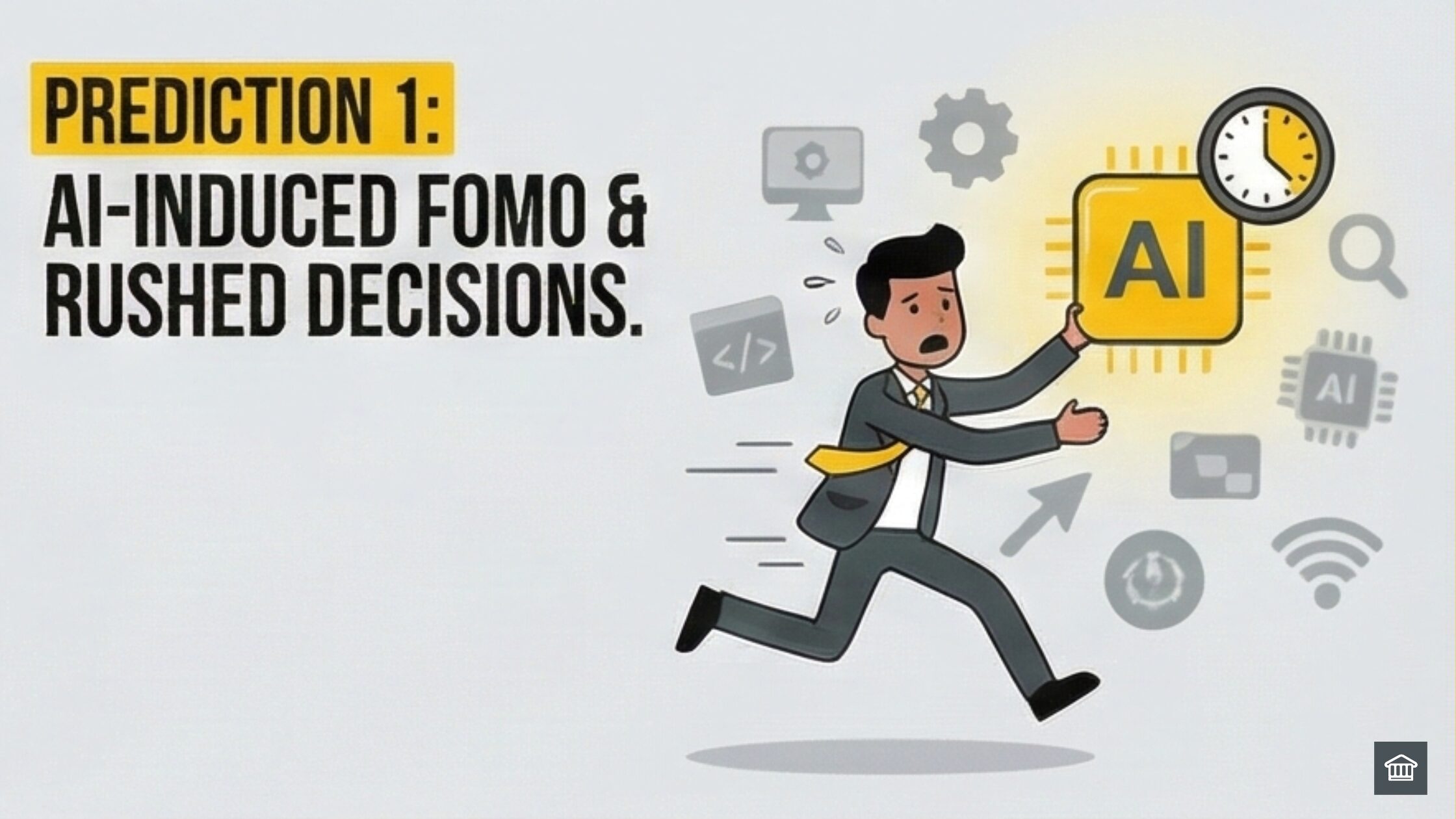
Prediction 1: The Failure Rate Will Exceed 70%, Driven by AI-Induced FOMO
The traditional failure rate for digital transformation projects has hovered around 70% for years. But 2026 will be different.
According to MIT research from 2025, 95% of generative AI pilots at enterprises are failing, and Bain’s analysis reveals that 88% of business transformations fail to achieve their original ambitions.
These aren’t isolated cases. This is the new normal, driven primarily by what we call “AI-Induced FOMO”—fear of missing out.
Executives are under unprecedented pressure. Every board meeting features headlines about AI breakthroughs, competitor announcements, and promised productivity gains.
NVIDIA’s stock soars (despite questions about revenue recognition methods), and consultants are telling every organization that transformation must happen now.
This urgency is toxic. Rushed decisions, technology-first approaches, and solution-mode deployment without proper vision and strategy are the hallmarks of failed transformations.
When executives panic and move fast without understanding the business problem first, failure isn’t just likely—it’s inevitable.
The irony is that this pressure comes from the same consultant-driven marketing cycles we’ve seen before.
The playbook hasn’t changed, only the technology label. Where we once had “moving to the cloud,” then “big data,” then “data lakes,” and “robotic process automation,” now we have “AI transformation.”
The underlying consultant model remains unchanged: create a sense of crisis, sell a framework, implement the technology, collect fees, and leave behind a trail of failed projects.
🤖 "FOMO is killing transformation. Companies rushing to deploy AI without vision, strategy, or outcomes. Moving deck chairs on the Titanic. The 70% failure rate gets worse in 2026 unless business leaders take control back from consultants and vendors. Stop the panic. Start with vision. 📉 ⚙️📈#DigitalTransformation #BusinessLed
Heath Gascoigne Tweet
Prediction 2: Smaller Organizations Will Move Fast But Embed Slowly; Larger Organizations Will Do the Reverse
Your ICP is clear: organizations with over 500 staff and/or $70 million in annual revenue are your target. Within this segment, you’ll see a marked divergence in 2026.
Smaller players—those at the lower end of your range—will adopt new technologies quickly. They’re nimble, they have fewer governance layers, and decision-making doesn’t require endless sign-offs. They’ll pilot AI solutions faster, experiment with new tools, and move to production more rapidly than their larger counterparts.
But here’s the catch: they’ll struggle to embed these solutions at scale. Quick adoption without a clear business strategy, without process redesign, and without proper change management creates technical debt and organizational confusion.
They’ll end up with AI tools that don’t deliver ROI, that confuse employees, and that fail to transform the business fundamentally.
Speed to market matters, but speed without strategy is just organized chaos.
Larger organizations like the FCA or Beazley Insurance face the opposite problem. They move slowly. Governance structures, regulatory requirements, multiple stakeholder sign-offs, and risk-averse cultures mean adoption takes years.
But once they commit—once they’ve invested in proper change management, aligned their people, processes, and data strategies—they’re far more likely to achieve sustainable, embedded transformation.
The challenge is that by the time they embed AI solutions, the technology landscape has already shifted again, and they’re perpetually behind the competitive curve.
The winner in 2026 won’t be the fastest or the slowest, but the organization that balances speed with strategy.
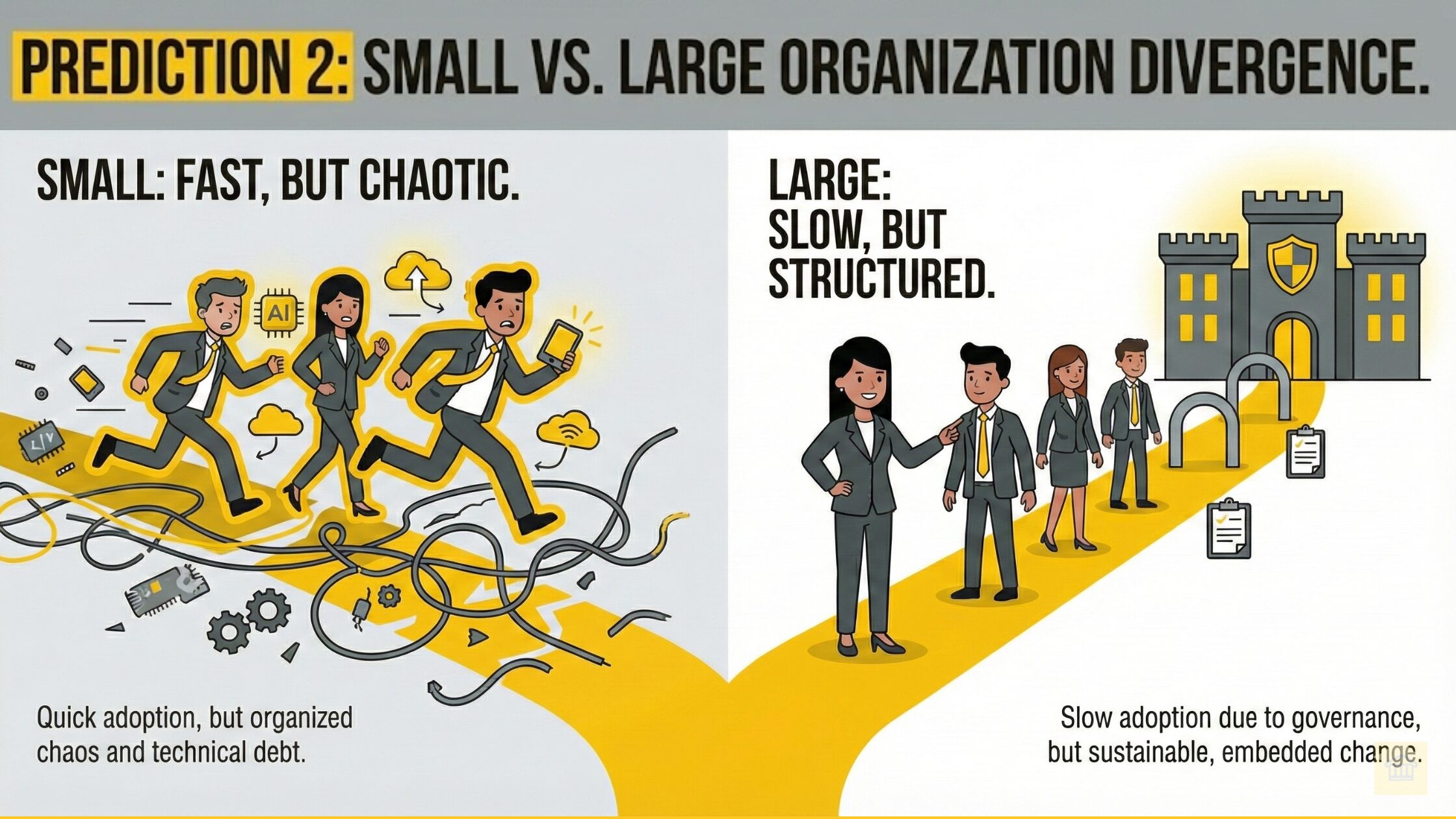
📈 "Size matters. Smaller players move fast but embed slowly. Large enterprises move slow but embed deep. The real skill? Do both: define strategy quickly, execute with discipline, measure obsessively. That's the formula for 2026. 🎯 #EnterprisTransformation #TransformationFramework #DigitalTransformation #BusinessLed
Heath Gascoigne Tweet
Prediction 3: Big Four Consulting Firms Are in Crisis, and Their "Solutions" Will Make Your Problems Worse
The data is unmistakable. In 2025, the Big Four consulting firms announced massive workforce reductions: PwC cut 5,600 employees; KPMG laid off hundreds; EY and Deloitte followed suit. McKinsey recently cut 200 technology roles. These aren’t efficiency gains; these are signs of a broken business model finally showing cracks.
For decades, the Big Four have operated on a simple cycle: identify an industry pain point, create a sense of urgency, sell a rehashed framework with a new name, implement the technology, collect massive fees, and leave.
They’ve done this with cloud transformation, digital transformation, big data, RPA, and now AI. Each cycle, the underlying problem remains: they focus on technology first, not business outcomes.
The tragedy of RPA is instructive here. UiPath was valued at $42 billion just after COVID, when remote work exploded and automation seemed like the answer to everything.
Today, its valuation has dropped to around $20 billion. Why? Because organizations deployed RPA robots, moved information across their systems faster, but achieved no business transformation. The technology worked perfectly; the business problem remained unsolved. Clients realized they’d invested millions in faster paper shuffling, not business change.
The same pattern is repeating with AI. Consultants are selling AI pilots, AI transformation frameworks, and agentic AI solutions without first asking:
- What is the business problem?
- What is the vision?
- How does AI help solve it?
They’re moving the deck chairs on the Titanic while the ship sinks.
In 2026, organizations will increasingly realize that consultancy-driven transformation is a poor bet.
The Big Four’s layoffs signal that their client base is tightening their purse strings and demanding better outcomes.
The smartest organizations will look for alternative approaches—business-led transformation, not technology-led transformation.
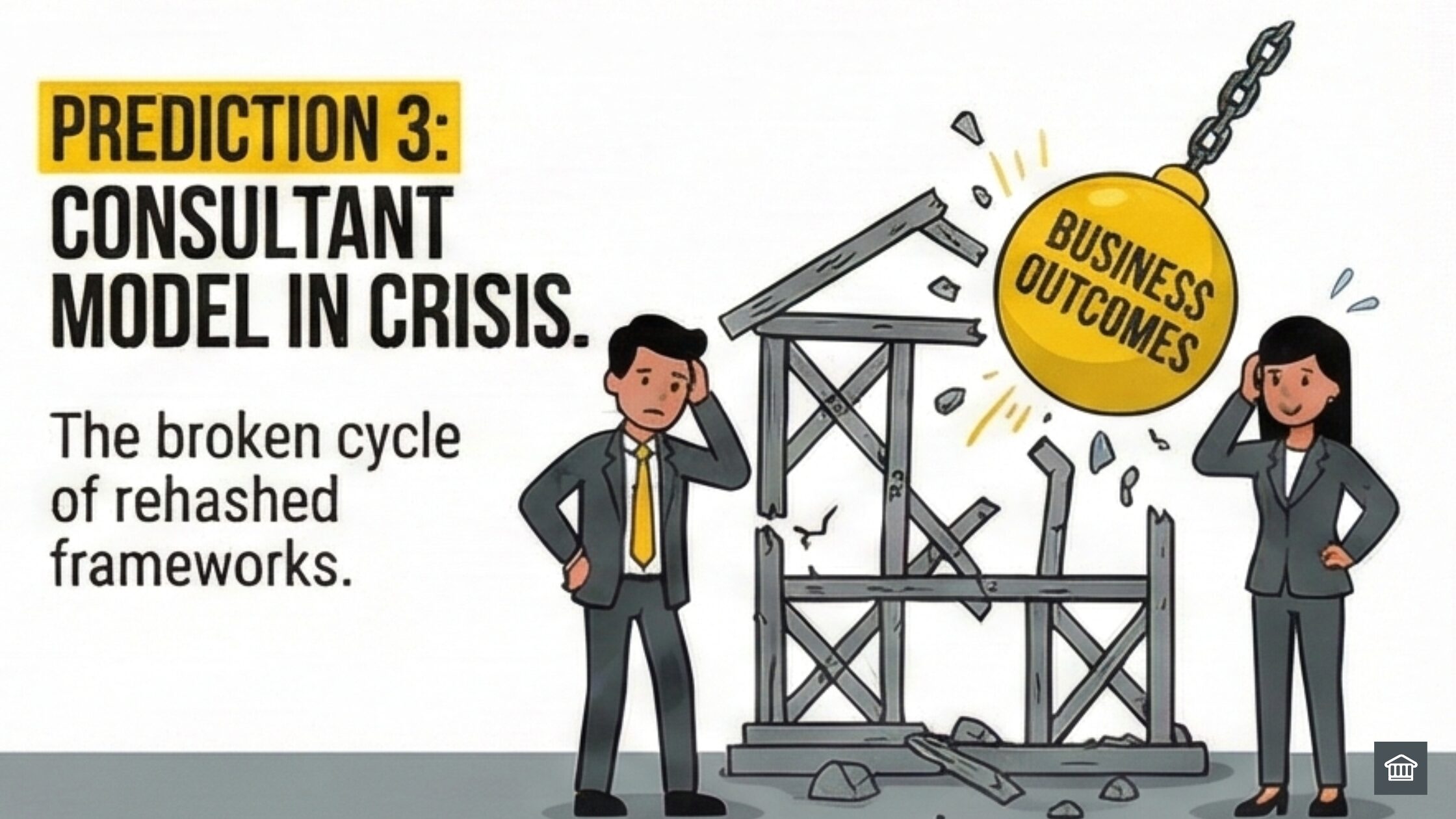
🎯 "UiPath crashed from $42B to $20B valuation in two years. Why? Organizations realized they'd spent millions automating paper shuffling, not transforming business. Same thing happening with AI. Consultants driving transformation = failure. Business leaders driving transformation = success. Choose wisely." 🚨 #RPA #TransformationReality
Heath Gascoigne Tweet
Prediction 4: The Four Levers of Business Transformation Will Become the New Battleground
Here’s what separates successful transformations from failed ones: a clear understanding of the four levers that actually drive change. These are not technology first, process second, data third. These four levers are:
- People: Your talent, culture, mindset, and capability
- Process: How work actually flows through your organization
- Technology: The tools and systems that enable people and processes
- Data: The information that informs decisions and fuels operations
Technology is only one-quarter of the equation. Yet 90% of transformation budgets go to technology, and 10% to people, process, and data strategy. This is backwards.
In 2026, the organizations that outperform their peers will be those that invest equally across all four levers. They’ll redesign processes to support the new operating model, upskill people to use new tools effectively, and clean their data before implementing new technology.
They’ll have a clear vision, derived strategies for each lever, and measurable objectives tied to business outcomes.
The consultant playbook glosses over this. They jump to the technology lever because it’s where the fees are highest.
But technology without people readiness, process clarity, and data quality is just expensive software sitting idle.
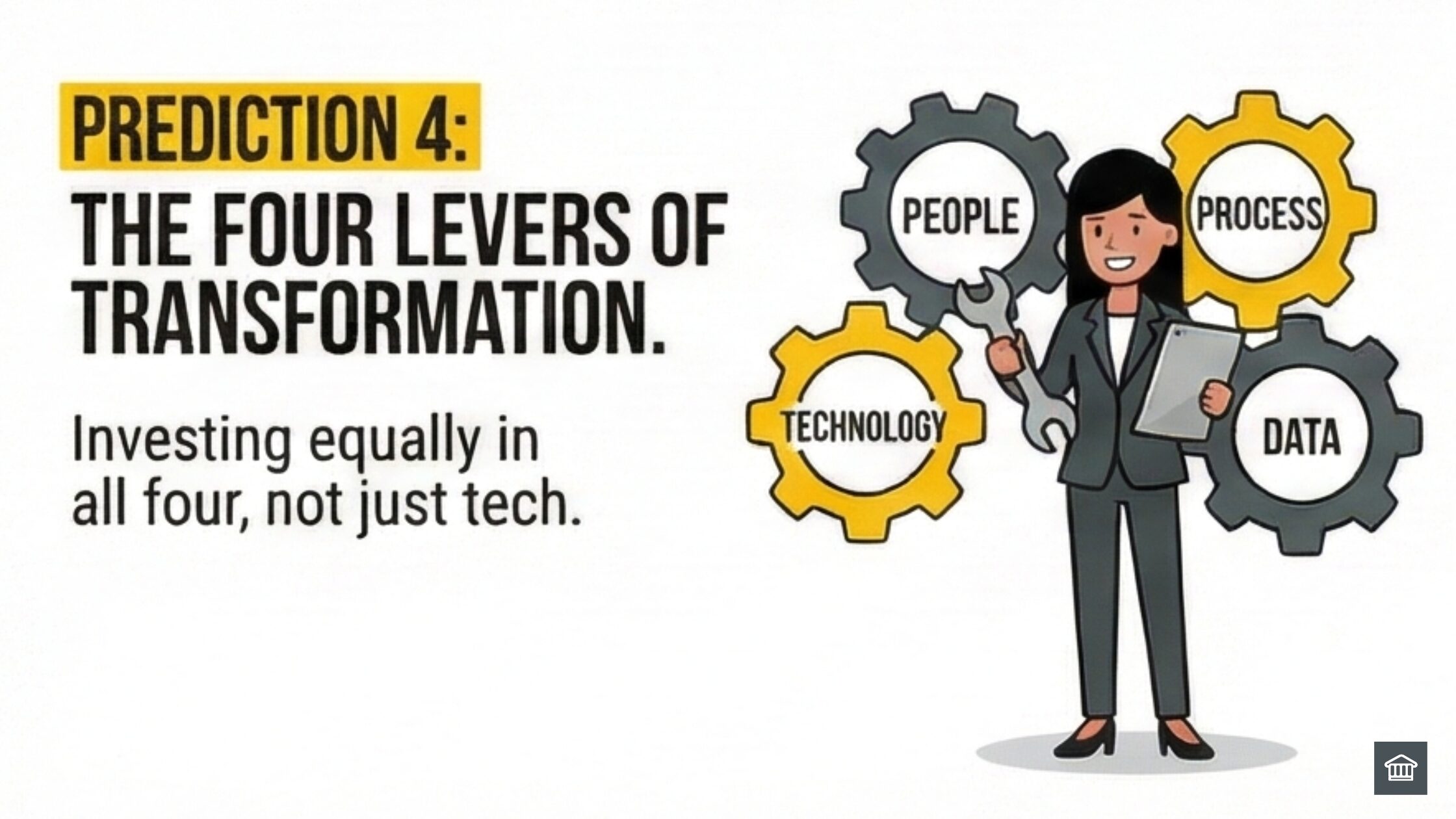
🚨 "Technology is only 1/4 of the equation. Yet orgs spend like it's the whole thing. People ready? Processes redesigned? Data clean? Only then does technology amplify value. Miss any lever and you fail. All four, always. 4️⃣ #BusinessTransformation #TransformationSuccess #HobaFramework
Heath Gascoigne Tweet
Prediction 5: Regulatory and Economic Pressure Will Force Transformation, But Macro Headwinds Will Complicate Everything
Looking beyond your direct business, there are significant macro trends that will shape organizational appetite for transformation in 2026.
The regulatory environment is tightening. The FCA, Beazley Insurance, and every regulated organization under their oversight will face new compliance requirements around AI governance, data privacy, and algorithmic transparency. These aren’t optional discussions—they’ll be mandated by regulators.
Transformation won’t be a competitive advantage anymore; it’ll be a compliance requirement.
At the same time, economic pressures are mounting. There are already reported significant budget holes in government, the migration patterns affecting labor markets, and the uncertainty around capital allocation.
Warren Buffett’s record $381.7 billion cash position in 2025 isn’t a sign of confidence; it’s a signal that even the world’s best investor sees limited value in current market prices. When Buffett sits on cash, it means valuations are stretched and quality opportunities are scarce. This affects corporate investment decisions.
Organizations will be forced to transform—either to stay compliant or to compete in shrinking markets. But constrained budgets, talent shortages (or labor market disruptions), and economic uncertainty will make transformation harder to execute.
Companies will need to do more with less, which puts even more pressure on getting the strategy right before spending money on technology.
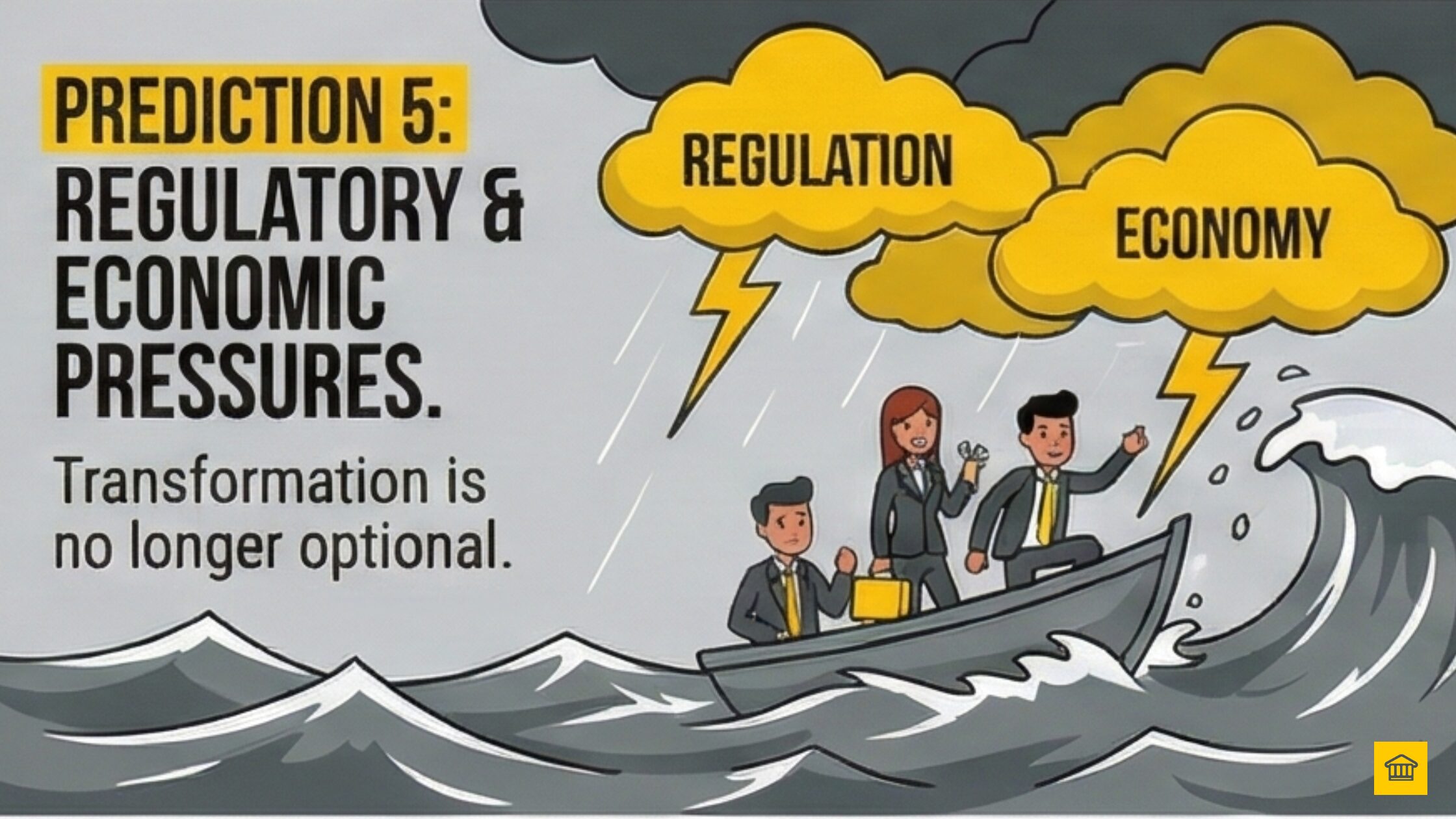
🚨 "Warren Buffett sitting on $381.7B cash. That's not confidence—that's "valuations are stretched, value is scarce." Orgs tightening budgets. Transformation ROI needed faster. No more "trust us, it'll work." Clarity and execution discipline now non-negotiable. 💰 #EconomicTrends #TransformationROI
Heath Gascoigne Tweet
Prediction 6: The Vision-First Approach Will Become a Competitive Differentiator
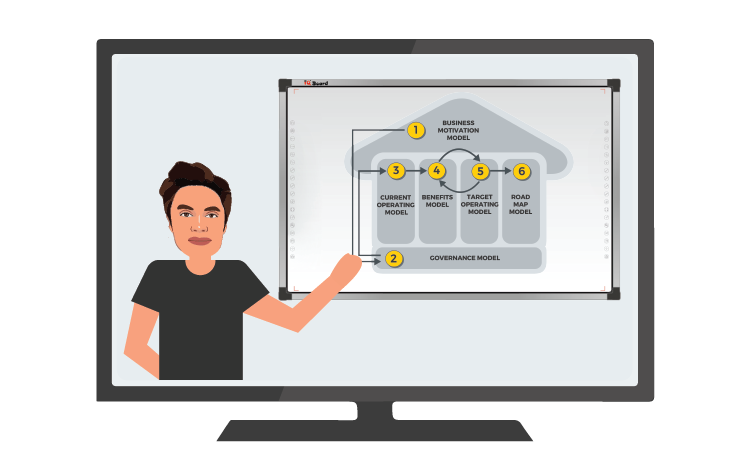
This is where our HOBA framework becomes increasingly relevant. In a market saturated with technology-led consultants and failed AI pilots, organizations that start with vision will stand out.
The vision-first approach means: before you spend a pound on new technology, define where you want your business to be in three to five years:
- What does success look like?
- How will you compete?
- What will your customer experience be?
- How will your people work?
- What role will technology and data play?
Only after you’ve defined and communicated this vision do you derive strategies for the four levers. Each strategy has clear objectives. Each objective has measurable outcomes. You sequence your work across people, process, technology, and data to align with your vision. You track progress obsessively against these measures.
This sounds obvious…
…but it’s not what’s happening in most organizations. Most are skipping the vision entirely, jumping straight to tactical initiatives like OKRs (which are tactical, not strategic), and confusing busy-ness with progress.
In 2026, the vision-first organizations will achieve transformation. Those that continue to skip vision and jump to technology will join the 70% (or 95%) failure rate.
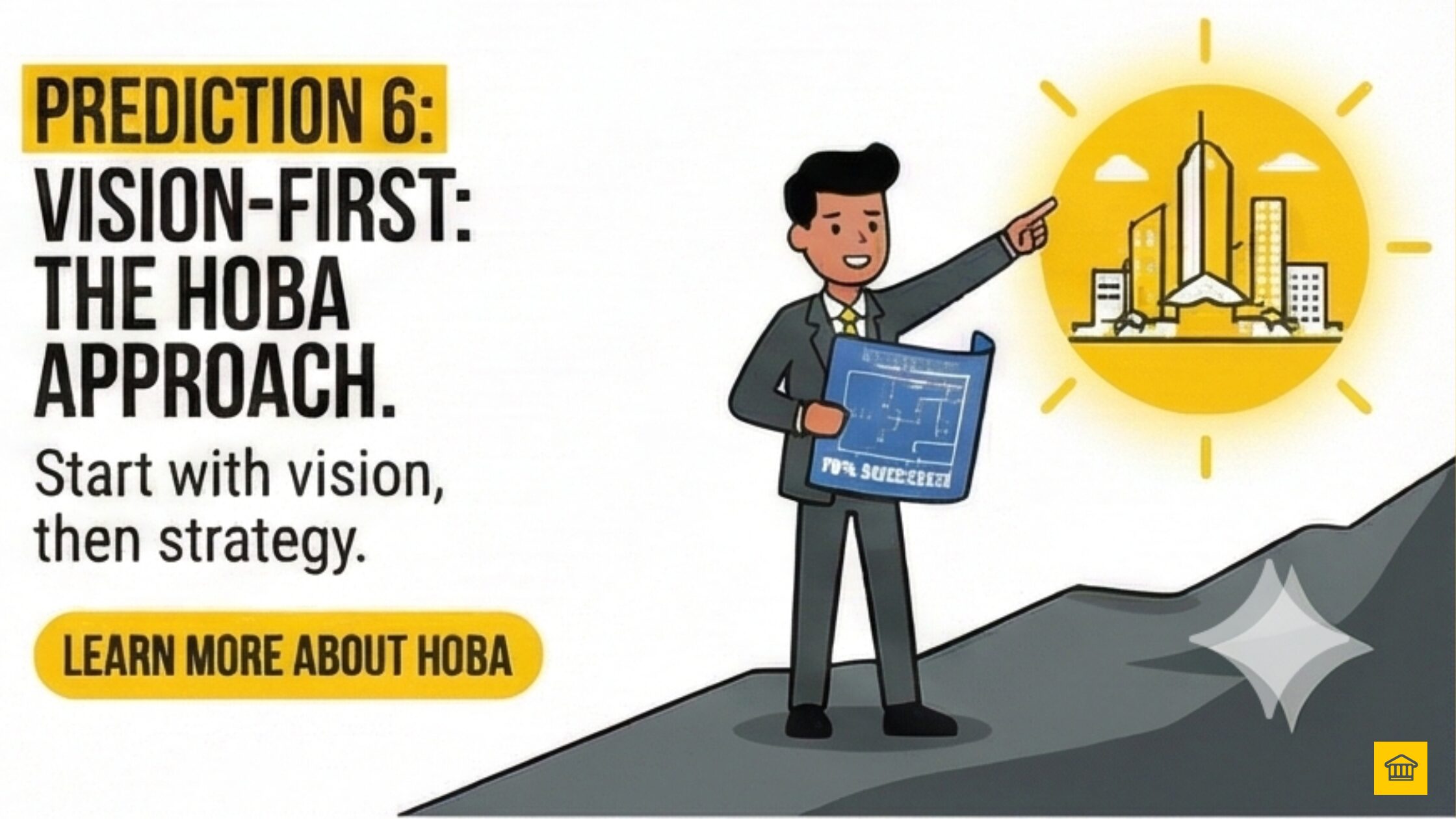
⚡ "Most orgs skip vision and jump to OKRs. OKRs are tactical, not strategic. They create illusion of progress while business stays same. Vision = clarity starts here. Define where you're heading. Derive strategy. Set objectives. In that order. 🎯" #StrategicVision #BusinessStrategy #TransformationLeadership
Heath Gascoigne Tweet
Prediction 7: Transparency Will Become the Battleground, and the AI Hype Will Deflate
There’s a fundamental issue brewing in the AI space around transparency and honest accounting. NVIDIA’s accounting practices are being scrutinized. Michael Burry and other respected investors are raising red flags about revenue recognition.
Deep Seek achieved ChatGPT-level performance at one-tenth the cost, suggesting that much of the AI boom hype is about marketing more than fundamental breakthroughs.
In 2026, this will come to a head. Organizations will start asking harder questions:
- Are we really getting ROI from our AI investments?
- Are vendors inflating their success stories?
- Are we being sold another RPA cycle, where the technology works but the business doesn't transform?
This skepticism is healthy. It will force consultants and vendors to focus on measurable outcomes rather than buzzwords.
It will make the case for the vision-first approach even stronger, because you’ll be able to clearly define whether your transformation is working or not.
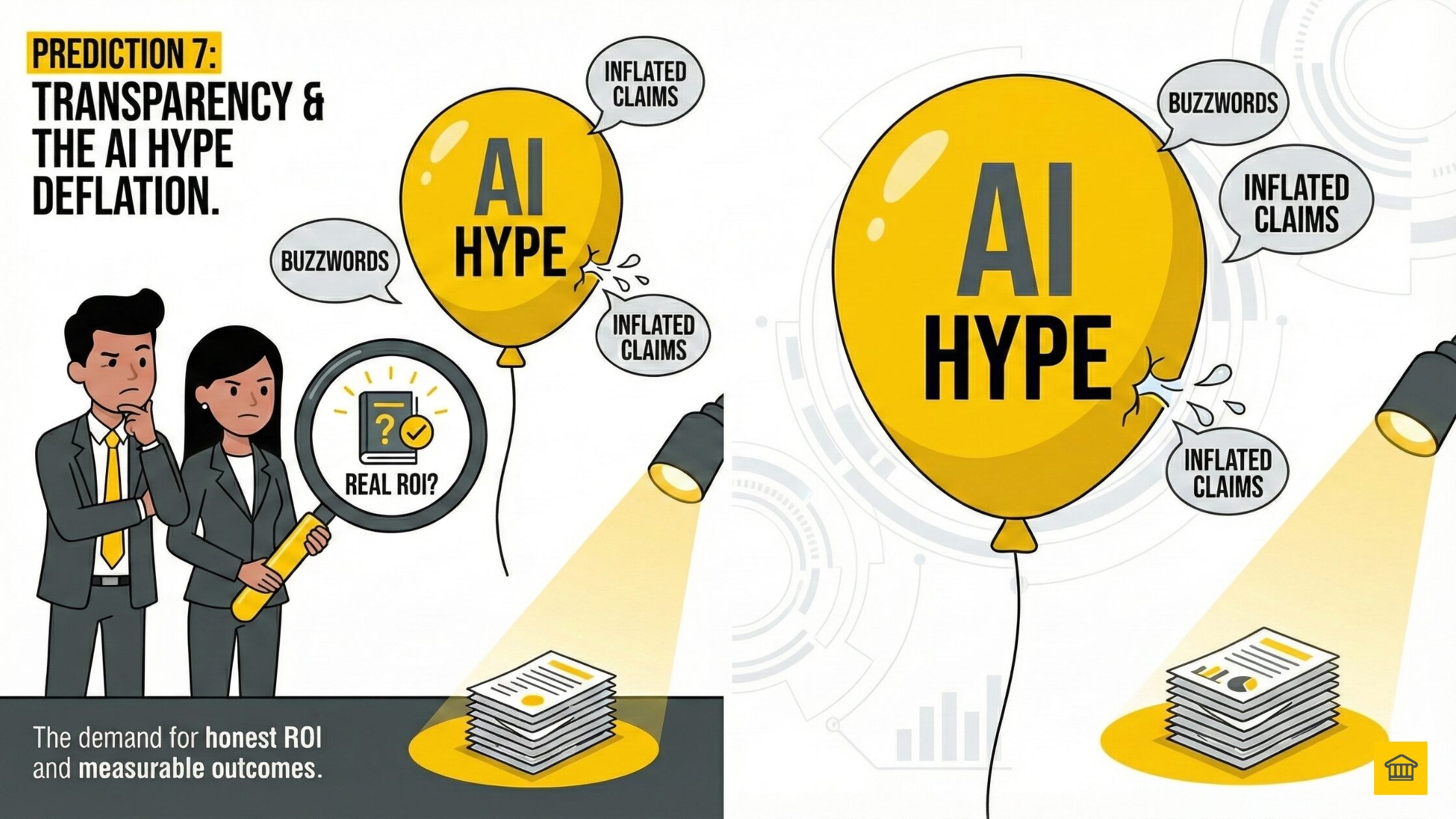
⚠️"The emperor has no clothes. Everyone sees it now. AI vendors, consultants, platforms all hyping value they can't deliver. Orgs finally asking: where's the ROI? Where are the outcomes? 2026 scrutiny will separate real transformation from marketing noise. Prepare. 🎭 #TransformationTruth #HypeVsReality #MeasurableOutcomes
Heath Gascoigne Tweet
Prediction 8: Execution Speed Will Determine Winners and Losers
Finally, 2026 will be defined by execution speed—but only for organizations that have the strategy right. Speed without strategy is failure. Strategy without speed is irrelevance.
The organizations that will win are those that do three things simultaneously: define their vision and strategy quickly (months, not years), execute in rapid iterations with clear milestones, and measure relentlessly against outcomes.
They’ll move faster than the large enterprises, but more strategically than the small players. They’ll embed change as they go, learning from early pilots and scaling what works.
This requires a different approach to transformation than what most consultants offer.
It requires business leadership, not consultant leadership. It requires clear ownership and accountability. It requires saying no to initiatives that don’t support the vision.
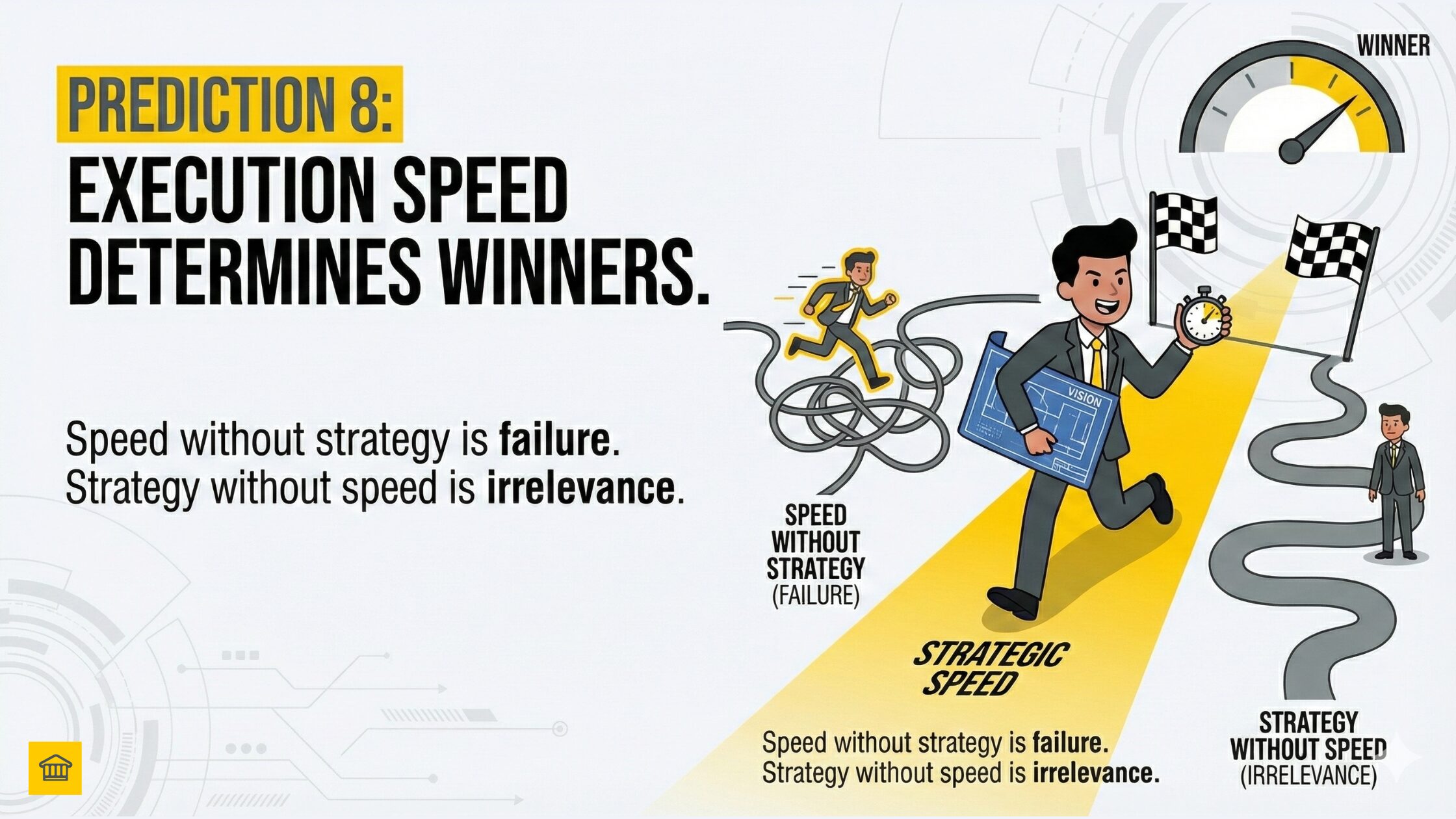
🚀 "Slow is the new fast in transformation. But "slow" ≠ glacial. Compress strategy phase, sprint on execution with clear milestones and measurement. Most orgs take 12-18 months on strategy. We compress to weeks, then execute in rapid cycles. That's the formula" ⏱️ #ExecutionExcellence #MethodologyMatters
Heath Gascoigne Tweet
The Bottom Line: Business-Led Transformation Is No Longer Optional
The 70% failure rate will persist—or worse—in 2026 because the underlying problem remains: organizations are treating transformation as a technology problem when it’s fundamentally a business problem. Consultants will continue to sell technology-first, vision-last approaches because that’s where the money is. FOMO will continue to drive rushed decisions. And executives will continue to confuse busyness with progress.
Read that again: its not getting betters because the underlying problems remains –
- Organizations are treating transformation as a technology problem when it's fundamentally a business problem,
- Consultants will continue to sell technology-first, vision-last approaches because that's where the money is,
- FOMO will continue to drive rushed decisions, and
- Executives will continue to confuse busyness with progress.
The organizations that will thrive are those that break this pattern. They’ll put business leaders in control of transformation, not consultants.
They’ll start with vision, not with technology. They’ll invest equally in people, process, technology, and data.
They’ll measure ruthlessly against business outcomes, not technical metrics. And they’ll move with speed and agility, not bureaucratic caution.
This is what business-led digital transformation looks like. And in 2026, it will be the only approach that delivers results.
🔥 Is Your Organisation Ready for AI? Don’t Guess—Get the Facts.
- Assess AI readiness in 6 areas
- Get tailored, practical recommendations
- Benchmark strategy, tech, and impact
🤖 "70% of AI projects fail because they ask 'How can we use AI?' instead of 'What business problem are we solving?' Wrong question = wrong solution. 🎯💡 #AIFail #BusinessFirst #ProblemSolving" ⚙️📈
Heath Gascoigne Tweet
Get the Support You Need for 2026 Transformation
The predictions above aren’t meant to discourage—they’re meant to empower.
Organizations that understand these trends and act decisively will outpace their competitors. But transformation is complex, and getting it right requires more than insights. It requires the right framework, the right expertise, and the right tools.
Depending on where you are in your transformation journey, we offer support tailored to your needs:
If you're an enterprise leader (500+ staff, £70M+ revenue) tasked with transformation:
You don’t have time for consultant-driven processes that take years and deliver uncertain outcomes. Our HOBA Business Transformation consulting and HOBA Academy training programs put your business back in control.
We help you define your vision, align your four-lever strategy, and execute with speed and accountability.
Learn how we’ve guided organizations across finance, insurance, government, and beyond through successful, measurable transformations.
If you're a transformation consultant or boutique consultancy:
The old consultant model is broken, and you know it. Clients are tired of frameworks that don’t deliver outcomes.
If you’re looking to offer your clients a proven, vision-first approach backed by a clear methodology and software platform, our HOBA Certified Partner Program is designed for you. Join a growing network of consultants delivering real transformation outcomes—and building sustainable, outcome-based practices.
If you want to build on the latest transformation platform:
HOBA Pro AI is a business transformation software platform built specifically for the HOBA framework—designed to guide organizations through vision definition, strategy development, objective setting, and outcome measurement.
It brings AI-assisted guidance to transformation planning without replacing the business judgment that matters most.
We’re in the final stages of launch and actively building our user community.
If you're exploring transformation approaches and want to learn more
Start with our free HOBA Readiness Scorecard. Based on your role in the organisation and where your organization is in terms of the transformation journey – planning, just started or deep in delivery, we have a scorecard and customised report for you, with tips to improve your individual score and overall score so you can be part of the 30% that make business transformation a success in 2026!
This report is a no-pressure way to understand whether the business-led, vision-first approach is right for you.
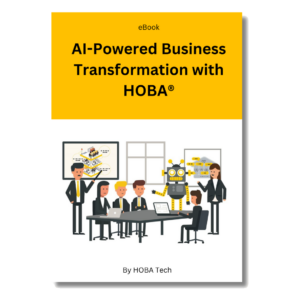
A practical guide to applying AI with the HOBA® agile framework so you deliver transformation faster, with less risk and more ROI.
- How AI accelerates each step of HOBA®
- Best practices for safe, scalable AI adoption
🤖 “If you're doing transformation in 2026 the way you did it in 2020, you're already behind. The landscape shifted. Failures are visible. Excuses are gone. Only orgs fundamentally changing their approach will survive and thrive. Everything else is theatre " 🎬 #TransformationEvolution #FutureReady
Heath Gascoigne Tweet
Ready to Transform Your Organization?
Get the same methodology that helped BP Oil & Gas, MHRA Government, and Cigna Healthcare achieve successful AI transformations.
💬 Your Next Steps: Tools and Resources
👐 Become a HOBA Founding Partner – Join the exclusive ANZ launch
📚 Partner Toolkit – Full access to HOBA frameworks, templates, and the award-winning Playbook
🚀 Early Access to HOBA Pro AI – Be the first to use the AI-powered transformation platform
📞 Or schedule a call with Heath or our team to review your suitability for the Partner Programme – Apply here
About HOBA Tech
If this resonated with you, discover how to make Business Transformation a reality—with less stress, fewer resources, and faster results. Explore our award-winning agile Business Transformation Framework, trusted by organizations worldwide, from the UK Government and FTSE-100 companies to innovative start-ups. Ready to begin your transformation journey? Start here.
Curious why The Business Transformation Playbook is hailed as the “Business Transformation Bible”? See what readers are saying in the Amazon reviews.
We’d love to hear your thoughts! Let us know in the comments what stood out to you or what topics you’d like us to cover next. If you found this valuable, share it with others who could benefit!
Thank you for reading, and here’s to your transformation success!
Sincerely,
Heath Gascoigne
P.S. If you want to join our Business Transformator community of 2,000+ like-minded Business Transformators, join the community on the Business Transformator Facebook Group here.
P.P.S. If you want to learn more about business transformation, check out The Business Transformation Playbook.