The Agentic Operating Model: Where AI Agents Fit, and Where They Don't | HOBA
📷Click on any image to enlarge.
Everyone Is Buying Agents. Almost No One Has Designed Where They Go.
Every board meeting now has the same question on the agenda: "What's our AI agent strategy?"
Vendors have an answer ready. Buy the platform, connect it to your systems, and let the agents loose on your processes.
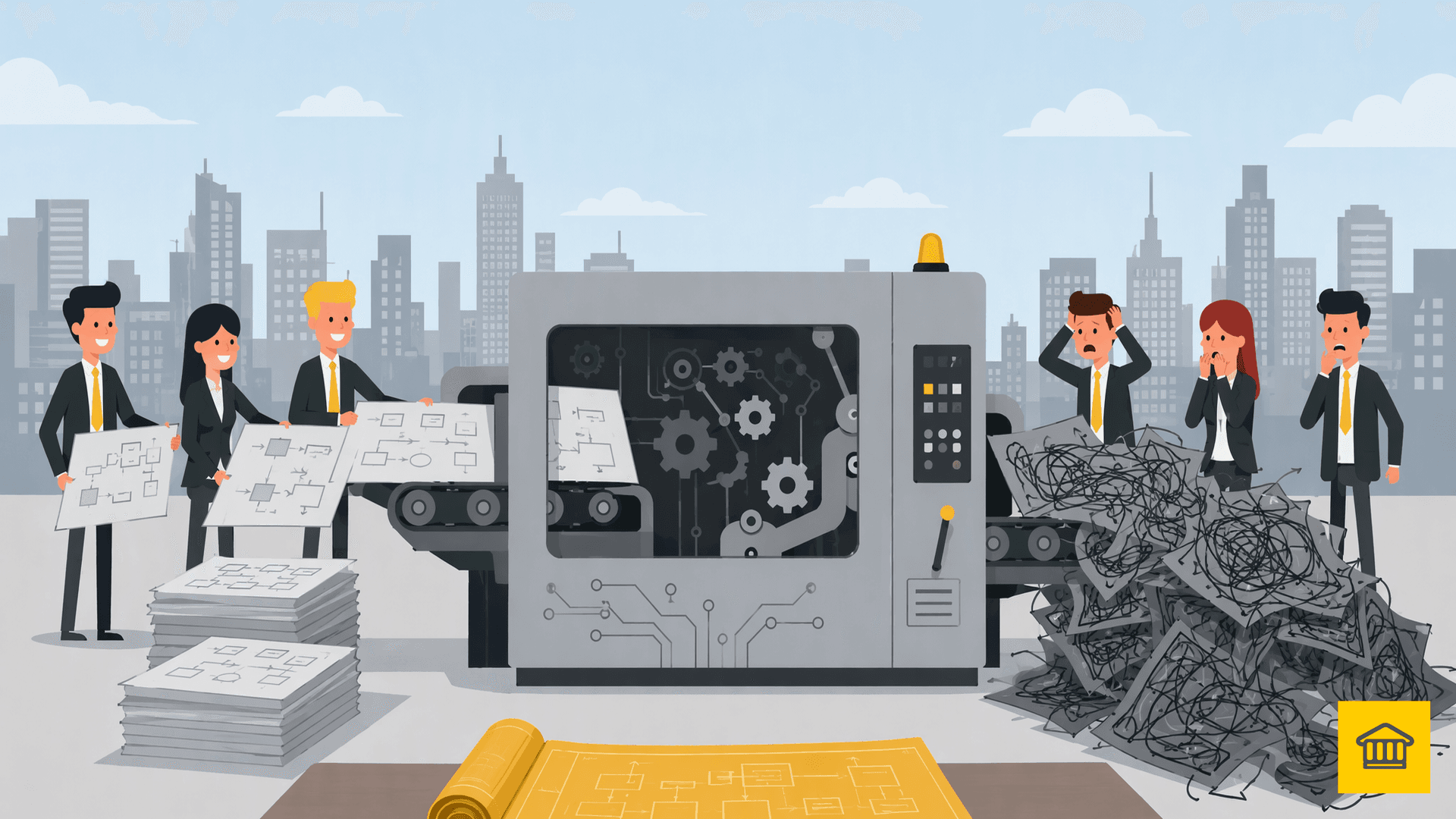
Here's the problem. An AI agent doesn't fix a process. It runs one. If the process is broken, duplicated or nobody can explain why it exists, the agent will run that broken process faster, at scale, and without anyone noticing until the damage shows up in the numbers.
The question isn't "which agents should we buy?" It's "what should our operating model look like when some of the work is done by agents?" That's an operating model question, and it needs an operating model answer.
What Is an Agentic Operating Model?
An operating model describes how an organisation delivers its strategy: who does the work, through which processes, with what technology and data, under what governance.
An agentic operating model is an operating model in which some of that work is done by AI agents acting with a degree of autonomy. That changes four things you can't leave to chance:
- People: which decisions stay with people, which move to agents, and who is accountable when an agent gets it wrong.
- Process: where in each process an agent acts, where it hands over to a person, and where it must stop and ask.
- Technology: which systems agents can read from and write to, and which are off-limits.
- Data: what data agents rely on, who owns its quality, and what happens when it's wrong.
If your current operating model can't answer those questions for the work people do today, it can't answer them for agents either. We've written before about what happens when agents run without that design.
Why Starting With the Agent Is Backwards
Most agent programmes start with the technology: pick a use case, build an agent, look for a process to point it at.
That's the same mistake organisations made with automation, and with digital before that. We saw it play out in a public sector collections service, where the same process ran more than 50 different ways across more than 50 sites. Two global consultancies spent 18 months on it without change. Automation was never the starting point. Eliminating the duplication was, and it found £62M of written-off fines inside one process.
Automate 50 broken versions of a process and you get 50 faster broken processes. Put an agent on top and you get 50 faster broken processes that make their own decisions.
 🔍 Click to enlarge
🪜 “An AI agent doesn't fix a process. It runs one. Eliminate, standardise and optimise first, then automate, and only then add the agent.” #AgenticAI #BusinessTransformation #HOBA

The HOBA Lens: Agents Are the +1, Not the 1
The HOBA® 4+1 Ladder sets the order of work for any process you want to improve:
- Eliminate: stop doing work that adds no value.
- Standardise: make the work that remains consistent.
- Optimise: improve the standard way of working, including its quality.
- Automate: let systems do the repeatable parts.
- +1 AI: add AI, including agents, where judgement at speed adds value.
Agents belong on the fifth rung. Climb the first four and the agent inherits a clean, standard, measured process with clear decision points. Skip them and the agent inherits every workaround you have.
The ladder sits inside the six HOBA steps: Focus, Control, Analyse, Evaluate, Design, Implement. Agent design happens in step 5, Design, once you've analysed how the operating model really runs and evaluated your options. Not before. If you want the longer argument, read why your AI strategy is backwards.
An Illustrative Example: The Revenue Dip Nobody Can Explain
This is an illustrative scenario, not a client case study. It's based on patterns we see repeatedly in large, multi-site organisations.
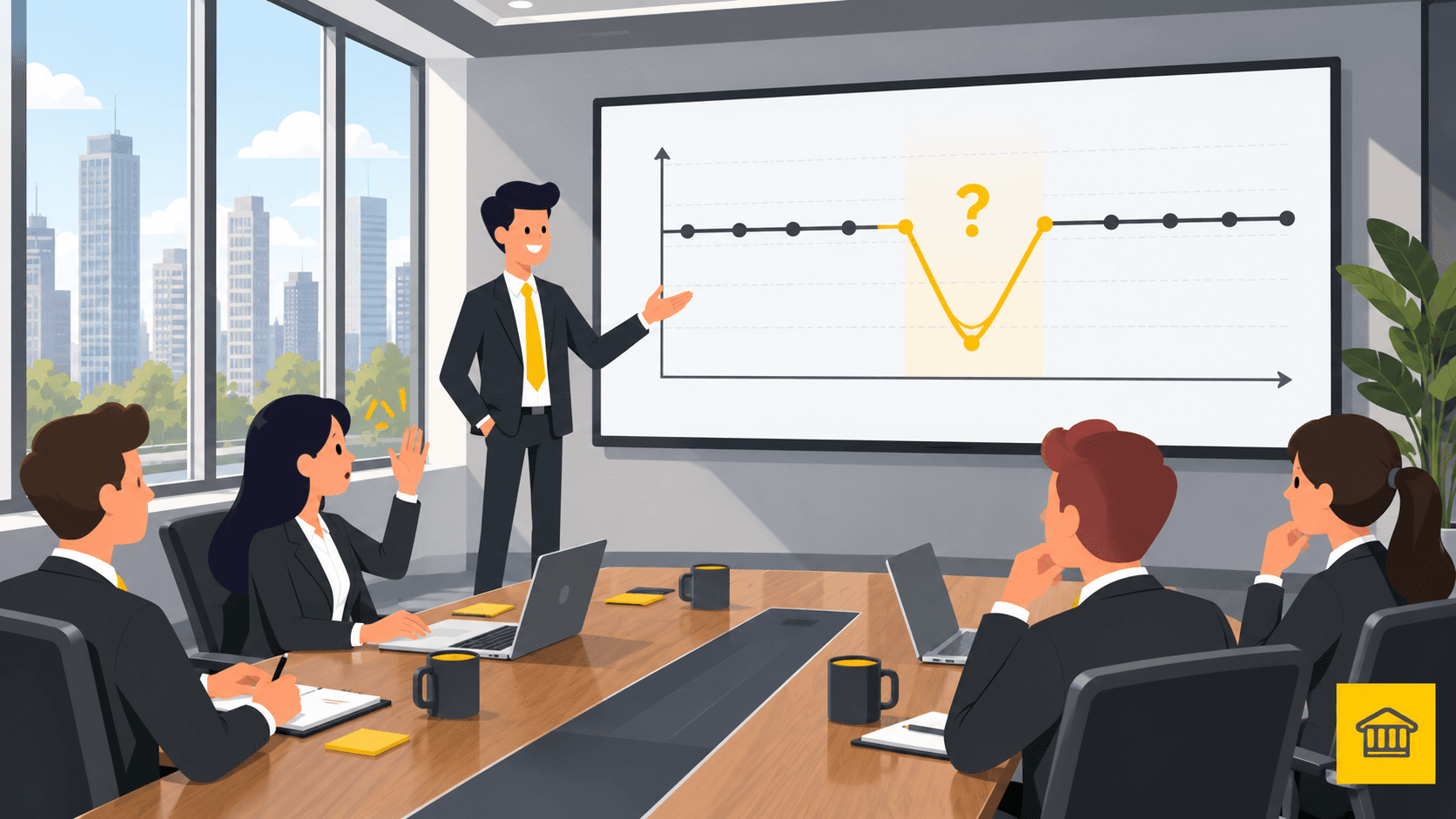
A telecommunications operator's executive team sees a recurring dip in revenue in their monthly reporting. It comes back every month. Nobody can explain it, and the instinct is to buy an AI agent to monitor revenue and flag anomalies.
Here's how the same problem looks when you work it business-first:
- Focus and Analyse: instead of watching revenue, trace it back through the processes that touch it. In this scenario the trail leads to incident management: when a network fault hits a customer, the way the incident is logged, prioritised and closed varies by region, and some faults trigger service credits that are never reconciled.
- Eliminate: remove the duplicate logging steps and manual hand-offs between regional teams.
- Standardise: one incident process, one set of priority rules, one system of record.
- Optimise: link incident priority to customer and revenue impact, so the faults that cost the most get fixed first.
- Automate: route incidents, notify customers and raise credits automatically.
- +1 AI: now there's a place for agents. An agent can classify incoming incidents, correlate related faults and draft the customer update. A person still approves service credits above a threshold and owns the decision to escalate.
Notice where the agent ended up: on a standard process with clear decision rights, doing the work it's good at, with a person accountable for the decisions that matter. That's an agentic operating model. An anomaly-detection agent bolted onto the revenue report would have flagged the dip every month and changed nothing.
Where Agents Fit, and Where They Don't
| Good fit for an agent | Keep with people |
|---|---|
| High-volume, rules-based triage and classification | Decisions with legal, financial or safety consequences |
| Gathering, summarising and drafting from known sources | Exceptions the process wasn't designed for |
| Correlating signals across systems | Customer outcomes that need empathy or negotiation |
| Monitoring a standard process for drift | Setting the rules agents work to |
The line moves as your processes mature. But it should always be drawn in your operating model, by the business, before an agent goes live.
What to Do Next
- Pick one process that matters, ideally one where a business result you care about is going wrong.
- Map how it really runs, not how the policy says it runs.
- Climb the ladder: eliminate, standardise and optimise before you automate anything.
- Design the agent's role into the target operating model: what it does, what it hands over, and who is accountable.
- Hold the model in one place, so people and agents work from the same design. That's what HOBA Pro, our target operating model software, is built for.
We're writing up a full agentic operating model case study. Join the waitlist to be first to read it.
Frequently Asked Questions
What is an agentic operating model?
An agentic operating model is an operating model in which some of the work is done by AI agents acting with a degree of autonomy. It defines which work agents do, which work people keep, how they hand over to each other, and who is accountable for agent decisions.
How is an agentic operating model different from a target operating model?
It isn't a separate thing. An agentic operating model is a target operating model that includes AI agents as part of the workforce. The same disciplines apply: people, process, technology, data and governance, designed together.
When should an organisation introduce AI agents?
After the process has been eliminated, standardised, optimised and automated, the first four rungs of the HOBA 4+1 Ladder. Introducing agents earlier means automating waste and inconsistency.
Who is accountable when an AI agent makes a mistake?
A named person or role, always. The operating model should define which agent decisions need human approval, which are reviewed after the fact, and who owns the outcome. We cover this in more depth in agent-native process redesign.
About HOBA Tech
If this resonated with you, discover how to make Business Transformation a reality — with less stress, fewer resources, and faster results. Explore our award-winning agile Business Transformation Framework, trusted by organisations worldwide, from the UK Government and FTSE-100 companies to innovative start-ups. Ready to begin your transformation journey? Start here.
Curious why The Business Transformation Playbook is hailed as the "Business Transformation Bible"? See what readers are saying in the Amazon reviews.
We'd love to hear your thoughts! Let us know in the comments what stood out to you or what topics you'd like us to cover next. If you found this valuable, share it with others who could benefit!
Thank you for reading, and here's to your transformation success!
Sincerely,
Heath Gascoigne
P.S. If you want to join our Business Transformator community of 2,000+ like-minded Business Transformators, join the community on the Business Transformator Facebook Group here.
P.P.S. If you want to learn more about business transformation, check out The Business Transformation Playbook.

Heath Gascoigne
Hi, I'm Heath, the founder of HOBA TECH and host of The Business Transformation Podcast. I help Business Transformation Consultants, Business Designers and Business Architects transform their and their clients' business and join the 30% club that succeed.
TRANSFORM YOUR
ORGANIZATION
WITH THIS SIMPLE PROCESS
WE OFFER THE TRAINING FOR PEOPLE TO GO AND LEARN THE SKILLS NEEDED TO ACHIEVE THE SAME RESULTS AS ACHIEVED IN THIS CASE STUDY.
ENJOYING THIS POST?
GET THE NEXT ONE
Subscribe to our newsletter and get the latest insights delivered straight to your inbox.

Make HOBA Tech a Google Preferred Source.
One click and Google will start showing our articles in AI search results and AI Overviews when you search.
🚀 “Just read: "The Agentic Operating Model: Where AI Agents Fit, and Where They Don't | HOBA" — incredible insights on business transformation.” #BusinessTransformation