The 4+1 Process to AI: Why Elimination Comes Before Automation | HOBA
🤖The 4+1 Process to AI: Why Elimination Comes Before Automation
ChatGPT-5 has arrived, and with it comes the familiar refrain echoing through boardrooms worldwide: "We need AI. Now."
But here's the problem: rushing to AI is exactly why 70% of digital transformation projects fail.
The allure of artificial intelligence is undeniable. Promises of automation, efficiency gains, and competitive advantage make it irresistible. But as someone who has guided dozens of organizations through business transformation, I've watched companies invest millions in AI solutions only to discover they've automated dysfunction, standardized chaos, and optimized the wrong processes entirely.
Use the Table of Contents below to navigate directly to the sections that matter most to you.
In this blog, we’ll cover:
What You’ll Learn in This Article:
- The issue isn't the technology. It's the approach.
- The Crisis: Why Organizations Are Failing at AI Transformation
- Introducing the 4+1 Process to AI
- Step 1 - ELIMINATE: Remove Waste & Bottlenecks
- Step 2 - STANDARDIZE: Achieve Consistency & Quality
- Step 3 - OPTIMIZE: Improve Speed & Quality
- Step 4 - AUTOMATE: Reduce Risk & Human Error
- The +1 - APPLY AI: Enable Reasoning & Decision-Making
- The HOBA Framework: Our Structured Approach to Transformation
- Common Mistakes That Lead to the 70% Failure Rate
- How to Make the Process More Efficient
- Troubleshooting & FAQs
- The Choice: Human-First or Technology-First Transformation
- Your Next Steps: Tools and Resources
The issue isn't the technology. It's the approach.
At HOBA, we believe in business-led digital transformation - a methodology that puts people first and treats technology as what it truly is: a lever for change, not the change itself.
Today, I'm sharing our proven 4+1 Process to AI - a structured framework that ensures you build the right foundation before implementing any AI solution.
The Crisis: Why Organizations Are Failing at AI Transformation
Before we dive into the solution, let's understand the problem.
With ChatGPT-5's release, the conversation has shifted. Some celebrate its enhanced reasoning capabilities. Others mourn what they call "soullessness" - the sense that AI is becoming less human, more mechanical.
Both perspectives miss the fundamental issue: AI is a tool, not a strategy.
The 70% failure rate in digital transformation projects persists because organizations approach change backwards. They:
- Start with the solution (AI) rather than the problem
- Skip foundational work that makes automation possible
- Ignore the human element - the people who must adopt and sustain change
- Lack structured methodology for identifying what actually needs transformation
As W. Edwards Deming famously said: "A problem well-defined is a problem half-solved."
Yet most organizations don't define the problem at all. They jump straight to implementation.
Introducing the 4+1 Process to AI
The 4+1 Process is built on a simple truth: you cannot automate your way out of a poorly designed process.
Before AI can deliver value, you must:
STEP 1: ELIMINATE (Remove Waste & Bottlenecks)
STEP 2: STANDARDIZE (Achieve Consistency & Quality)
STEP 3: OPTIMIZE (Improve Speed & Quality)
STEP 4: AUTOMATE (Reduce Risk & Human Error)
+1: APPLY AI (Enable Reasoning & Decision-Making)
Let's break down each step in detail.
Step 1 - ELIMINATE: Remove Waste & Bottlenecks
The Problem:
Your processes are filled with activities that add no value. Unnecessary approvals. Redundant data entry. Manual workarounds for system limitations. Shadow processes because the official process doesn't work.
The HOBA Approach:
Before you automate anything, eliminate what shouldn't exist in the first place.
Ask:
- Why are we doing this? (The first "Why" in our 5W1H framework)
- What value does this step add to the customer or business?
- What happens if we remove this entirely?
- What bottlenecks are slowing the entire process?
Example:
A financial services client was automating their document approval process. Before implementing AI for document review, we discovered that 40% of documents submitted required no approval at all - they were routing through the system "just in case."
By eliminating unnecessary approval steps first, they reduced processing volume by 40% before touching any technology.
Your Action:
Map your current process. Identify every step. Challenge whether each step is necessary. Eliminate ruthlessly.
Step 2 - STANDARDIZE: Achieve Consistency & Quality
Your team has 12 different ways of doing the same task. Each person has their own "version" of the process. Quality is inconsistent. Results vary by who's doing the work.
The HOBA Approach:
Once you've eliminated waste, standardize what remains to create consistency and quality.
Ask:
- What is the ONE best way to perform this task?
- What variations exist, and why?
- What quality standards must be met every time?
- How do we ensure everyone follows the same process?
Example:
A manufacturing client had 15 different Excel templates for production reporting across departments. Each template had different formulas, formats, and data fields.
Before implementing any AI-powered analytics, they standardized to a single template with consistent data structure. This created the clean, consistent data foundation that AI requires.
Your Action:
Document the standardized process. Create templates, checklists, and guidelines. Train your team on the standard. Measure compliance.
Step 3 - OPTIMIZE: Improve Speed & Quality
The Problem:
Your process is standardized but slow. It's consistent but inefficient. Quality is achieved through excessive checking and rework rather than getting it right the first time.
The HOBA Approach:
With waste eliminated and process standardized, optimize for speed and quality improvements.
Ask:
- How can we do this faster without sacrificing quality?
- Where are the delays in handoffs between teams?
- What dependencies slow us down?
- How can we reduce cycle time while improving outcomes?
Example:
A healthcare provider had standardized their patient intake process but still took 45 minutes per patient. By optimizing form sequence, pre-populating known data, and reducing redundant questions, they cut intake time to 15 minutes while increasing data accuracy.
All without AI. Just smart process design.
Your Action:
Time your current process. Identify delays. Test improvements. Measure results. Iterate until you achieve your target speed and quality levels.
Step 4 - AUTOMATE: Reduce Risk & Human Error
The Problem:
Your process relies on humans for repetitive, rule-based tasks. Each repetition introduces risk of error. Manual work creates inconsistency despite your best efforts at standardization.
The HOBA Approach:
Now - and only now - automate repetitive, rule-based tasks to reduce risk and eliminate human error.
This is traditional automation: workflow tools, robotic process automation (RPA), system integrations.
Ask:
- What repetitive tasks can be automated?
- What rules govern these tasks?
- What data inputs and outputs are required?
- Where does human judgment still add value?
Example:
A retail client automated their inventory replenishment process after eliminating unnecessary approvals, standardizing reorder rules, and optimizing stock level calculations.
The automation worked beautifully - because the underlying process was sound.
Had they automated first, they would have simply processed bad decisions faster.
Your Action:
Identify rule-based, repetitive tasks in your optimized process. Implement automation tools. Test thoroughly. Monitor for errors or exceptions.
The +1 - APPLY AI: Enable Reasoning & Decision-Making
The Opportunity:
You've built a solid foundation. Waste is eliminated. Processes are standardized. Workflows are optimized. Rule-based tasks are automated.
Now you're ready for AI.
The HOBA Approach:
AI adds a layer of reasoning and low-risk decision-making on top of your solid foundation.
Unlike traditional automation that follows fixed rules, AI can:
- Learn from patterns in your data
- Make decisions within defined parameters
- Escalate exceptions when confidence is low
- Adapt as conditions change
- Provide insights humans might miss
Ask:
- Where would reasoning improve our process?
- What decisions are currently made by humans that could be assisted or automated by AI?
- What risk level is acceptable for AI-driven decisions?
- When should AI escalate to human judgment?
- What pre-approved solutions can AI implement autonomously?
Example:
A customer service organization had eliminated redundant inquiries, standardized response templates, optimized routing rules, and automated ticket classification.
They then applied AI to:
- Analyze sentiment and flag escalations before customers complained
- Suggest personalized responses based on customer history
- Route complex cases to specialists with relevant expertise
- Learn which solutions worked best for specific problem types
The AI succeeded because it was built on a foundation of excellent process design.
Your Action:
Identify decision points in your optimized, automated process. Determine acceptable risk levels. Implement AI with clear escalation rules. Monitor and refine continuously.
The HOBA Framework: Our Structured Approach to Transformation
The 4+1 Process doesn't exist in isolation. It's part of the broader HOBA (House of Business Architecture®) methodology - a business-led approach to digital transformation.
HOBA is built on six structured steps that address the 5W1H:
Step 1: FOCUS (Why are we doing this?)
Define the problem. Understand the business need driving change.
Step 2: CONTROL (Who's involved?)
Identify stakeholders, establish governance, secure sponsorship.
Step 3: ANALYZE (What's the problem/opportunity?)
Map current state, identify gaps, quantify the opportunity.
Step 4: EVALUATE (What benefits do we want?)
Define target benefits, determine required changes, build business case.
Step 5: DESIGN (Where, how, and when?)
Design the future state, plan implementation, sequence changes.
Step 6: IMPLEMENT (When will benefits be realized?)
Execute changes, measure adoption, realize benefits.
This structured approach applies the four levers of transformation:
- People - Who must change behavior?
- Process - What workflows must evolve?
- Technology - What tools enable change?
- Data - What information drives decisions?
AI is just one lever. Not all four
Common Mistakes That Lead to the 70% Failure Rate
As you implement the 4+1 Process, watch for these pitfalls:
Mistake 1: Starting with the Shiny Object
The Error: Technologists love new tools. ChatGPT-5 launches, and immediately there's pressure to "do something with AI."
The Fix: Start with the problem, not the solution. Ask "What are we trying to achieve?" before "How can we use this technology?"
Mistake 2: Skipping Steps
The Error: "We don't have time for all this process work. Let's just implement AI and iterate."
The Fix: Each step builds the foundation for the next. Skip elimination, and you'll automate waste. Skip standardization, and your AI will learn from inconsistent data. You'll iterate expensively.
Mistake 3: Ignoring the Human Element
The Error: Treating transformation as a purely technical exercise. Forgetting that people must adopt, use, and sustain the changes.
The Fix: Engage people early. Communicate clearly. Train thoroughly. Address resistance with empathy. Remember: business-led transformation puts people first.
Mistake 4: No Clear Business Case
The Error: Investing in change because "everyone else is doing AI" or "we need to innovate."
The Fix: Build a solid business case. Define expected benefits. Measure actual results. Hold the investment accountable to delivering value.
Mistake 5: Automating Dysfunction
The Error: Taking a broken process and making it run faster.
The Fix: Fix the process FIRST. Eliminate. Standardize. Optimize. Then automate. Then add AI.
⚡ TThe 4+1 Process To Ai
👏 “If you automate chaos, you just get faster dysfunction. Eliminate first. Then standardise. Then optimise. Only then should you automate—and only after that, apply AI." #AItransformation #DigitalTransformation #Automation #AIstrategy #4plus1Process #Leadership 💡🤖⚙️📈
Heath Gascoigne Tweet
How to Make the Process More Efficient
Once you understand the 4+1 Process, here's how to execute it efficiently:
Efficiency Tip 1: Use Cross-Functional Teams
Don't let IT drive AI implementation in isolation. Bring together business stakeholders, process owners, technology specialists, and end users from day one.
Efficiency Tip 2: Start Small, Scale Fast
Pilot the 4+1 Process on one high-value process. Prove the methodology. Learn what works. Then scale to other processes with confidence.
Efficiency Tip 3: Leverage Existing Tools
You don't need new software for every step. Use process mapping tools you already have. Start with spreadsheets for standardization. Test optimizations manually before building automation.
Efficiency Tip 4: Measure Everything
Baseline your current state. Set target metrics for each step. Measure actual results. Use data to drive decisions about what to eliminate, standardize, optimize, and automate.
Efficiency Tip 5: Apply the 80/20 Rule
Focus your effort where it delivers maximum impact. Eliminate the 20% of activities causing 80% of problems. Standardize the 20% of variations creating 80% of errors.
Troubleshooting & FAQs
Q: "Our leadership wants AI implemented immediately. How do I slow them down?"
A: Speak their language: risk and ROI.
Show them the 70% failure rate. Explain that rushing to AI without proper foundation is like building a house on sand. The investment will collapse.
Present the 4+1 Process as a risk mitigation strategy that protects their investment and accelerates time to value.
Position it as: "We're not slowing down. We're ensuring we get this right the first time instead of failing fast and expensively."
Q: "We've already implemented AI and it's not delivering results. What now?"
A: Go back to basics.
Audit your process using the 4+1 framework:
- Is there waste that AI is now processing faster?
- Is your process standardized, or is AI learning from inconsistent data?
- Have you optimized before automating?
- Is AI being asked to solve problems that should have been eliminated?
Often, the solution is to pause AI implementation, fix the underlying process, then reintroduce AI on a solid foundation.
Q: "How long does the 4+1 Process take?"
A: It depends on process complexity, but here's a typical timeline:
- Elimination: 2-4 weeks (workshops, mapping, decision-making)
- Standardization: 4-6 weeks (documentation, training, adoption)
- Optimization: 4-8 weeks (testing, measuring, iterating)
- Automation: 8-12 weeks (tool selection, development, testing)
- AI Application: 12-16 weeks (model training, validation, deployment)
Total: 6-10 months for a comprehensive transformation.
Yes, that's longer than "implement AI next quarter." It's also dramatically more likely to succeed.
Q: "Can we do multiple steps in parallel?"
A: Some overlap is possible, but respect dependencies:
✅ You can begin standardization documentation while finalizing elimination decisions.
✅ You can plan optimization experiments while standardization is rolling out.
❌ You cannot automate before optimizing - you'll automate the wrong process.
❌ You cannot apply AI before automating - you'll lack the data foundation AI requires.
Q: "What if ChatGPT-5 (or the next AI) changes everything?"
A: That's exactly the point.
Technology changes constantly. ChatGPT-6, GPT-7, and entirely new AI paradigms will emerge.
But the fundamentals of good process design don't change.
Eliminate waste. Standardize work. Optimize flow. Automate repetition. Apply intelligence strategically.
These principles have been true since Toyota developed the manufacturing processes that revolutionized industry. They'll remain true regardless of what AI emerges next.
The Choice: Human-First or Technology-First Transformation
Here's where the soul of transformation matters.
The debate about ChatGPT-5 losing its "soul" reflects a deeper anxiety: Are we building technology that serves humans, or humans that serve technology?
At HOBA, we've chosen our side: humans first.
That means:
- Understanding the problem before implementing solutions
- Engaging people in designing their future work
- Measuring benefits that matter to business and employees
- Using technology as a tool that amplifies human capability, not replaces it
- Maintaining human judgment where it adds value
- Keeping technology in service to business outcomes, not the reverse
The 4+1 Process embodies this philosophy. It's structured, yes. Methodical, absolutely. But at every step, it asks fundamentally human questions:
What problems are we solving for people?
How do we make their work better, not just faster?
Where does human insight still matter?
When should we pause and reflect before proceeding?
Technology changes. Humanity doesn't.
A practical guide to applying AI with the HOBA® agile framework so you deliver transformation faster, with less risk and more ROI.
- How AI accelerates each step of HOBA®
- Best practices for safe, scalable AI adoption
👏 “AI isn’t the strategy. It’s the final step of a structured one. Businesses that win with AI eliminate waste first and think human-first—not tech-first."#BusinessLedTransformation #AIforBusiness #4plus1AI #HOBATech #FutureOfWork #AgileTransformation 💼🧠⚠️🛠️
Heath Gascoigne Tweet
Your Next Steps: Tools and Resources
You now understand the 4+1 Process. Here's how to put it into action:
🎁 FREE Resource 1: AI-Powered Transformation Using HOBA eBook
Get our comprehensive guide to applying the HOBA methodology to AI transformation projects. Includes templates, case studies, and implementation checklists.
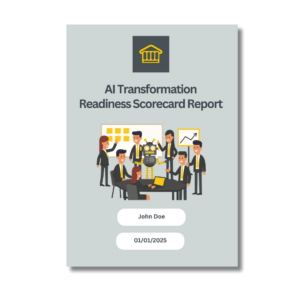
🎁 FREE Resource 2: AI Readiness Scorecard
Assess where your organization stands across the 4+1 Process. Identify gaps. Prioritize your next steps.
Take the AI Readiness Assessment →
📅 Upcoming Webinar: Implementing the 4+1 Process (Early November)
Join Heath Gascoigne for a live deep-dive into the 4+1 Process. Bring your questions. Get personalized guidance on applying this framework to your specific challenges.
Register for the Free Webinar →
🚀 HOBA Pro AI Beta: Coming Soon
Experience business transformation powered by structured AI. HOBA Pro combines our proven methodology with AI assistance to guide you through the entire transformation process.
Get Early Access to HOBA Pro AI Beta →
✅ Conclusion - Get the Process Right, Then Add AI
The promise of AI is real. ChatGPT-5 and future generations will continue advancing capabilities we can barely imagine today.
But AI is not a strategy. It's a tool.
The organizations that succeed with AI won't be those who implement fastest. They'll be those who implement smartest.
They'll eliminate waste before automating it.
They'll standardize processes before optimizing them.
They'll optimize workflows before automating them.
They'll automate repetitive tasks before adding AI reasoning.
They'll follow the 4+1 Process.
Because they understand that 70% of transformation projects fail not because of bad technology, but because of bad process.
Don't let AI hype cost you millions.
Get the foundation right. Build systematically. Apply technology strategically.
Transform with structure. Transform with HOBA.
🔥 Is Your Organisation Ready for AI? Don’t Guess—Get the Facts.
- Assess AI readiness in 6 areas
- Get tailored, practical recommendations
- Benchmark strategy, tech, and impact
👏 "You wouldn’t build a house without clearing the land first. Why would you build AI on broken processes? The 4+1 Process gives you the foundation to scale smart."#AIReadiness #TransformationLeadership #HOBAMethod #OperationalExcellence #ProcessBeforeTech 🏗️🧱📊🤝
Heath Gascoigne Tweet
💬 Call to Action:
👐 Become a HOBA Founding Partner - Join the exclusive ANZ launch (10 seats only, apply by 30 Nov or until fully allocated
📚 Partner Toolkit – Full access to HOBA frameworks, templates, and the award-winning Playbook
🚀 Early Access to HOBA Pro AI – Be the first to use the AI-powered transformation platform
📞 Or schedule a call with Heath or our team to review your suitability for the Partner Programme – Apply here
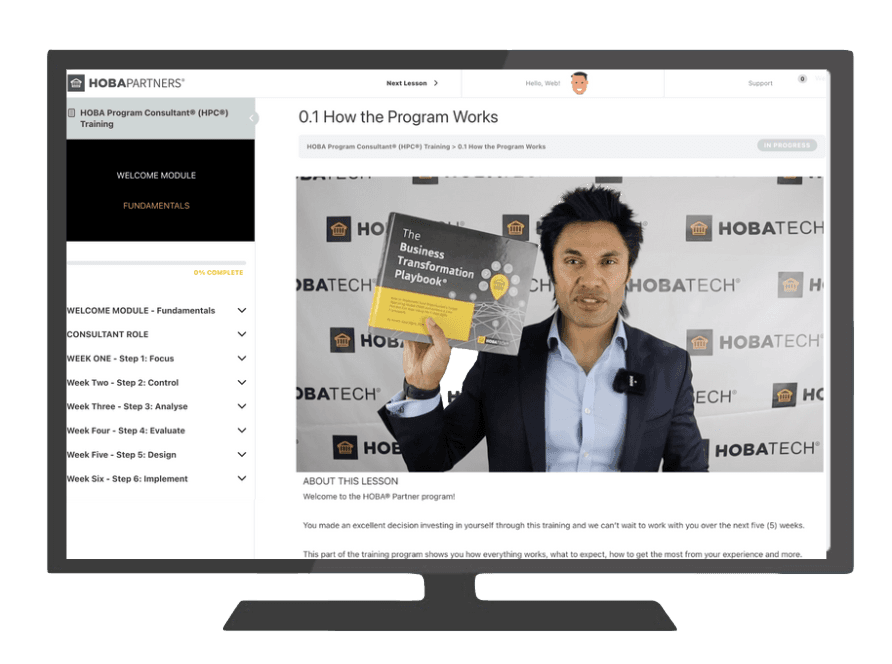
LOOKING
FOR THE
BEST
TRAINING?
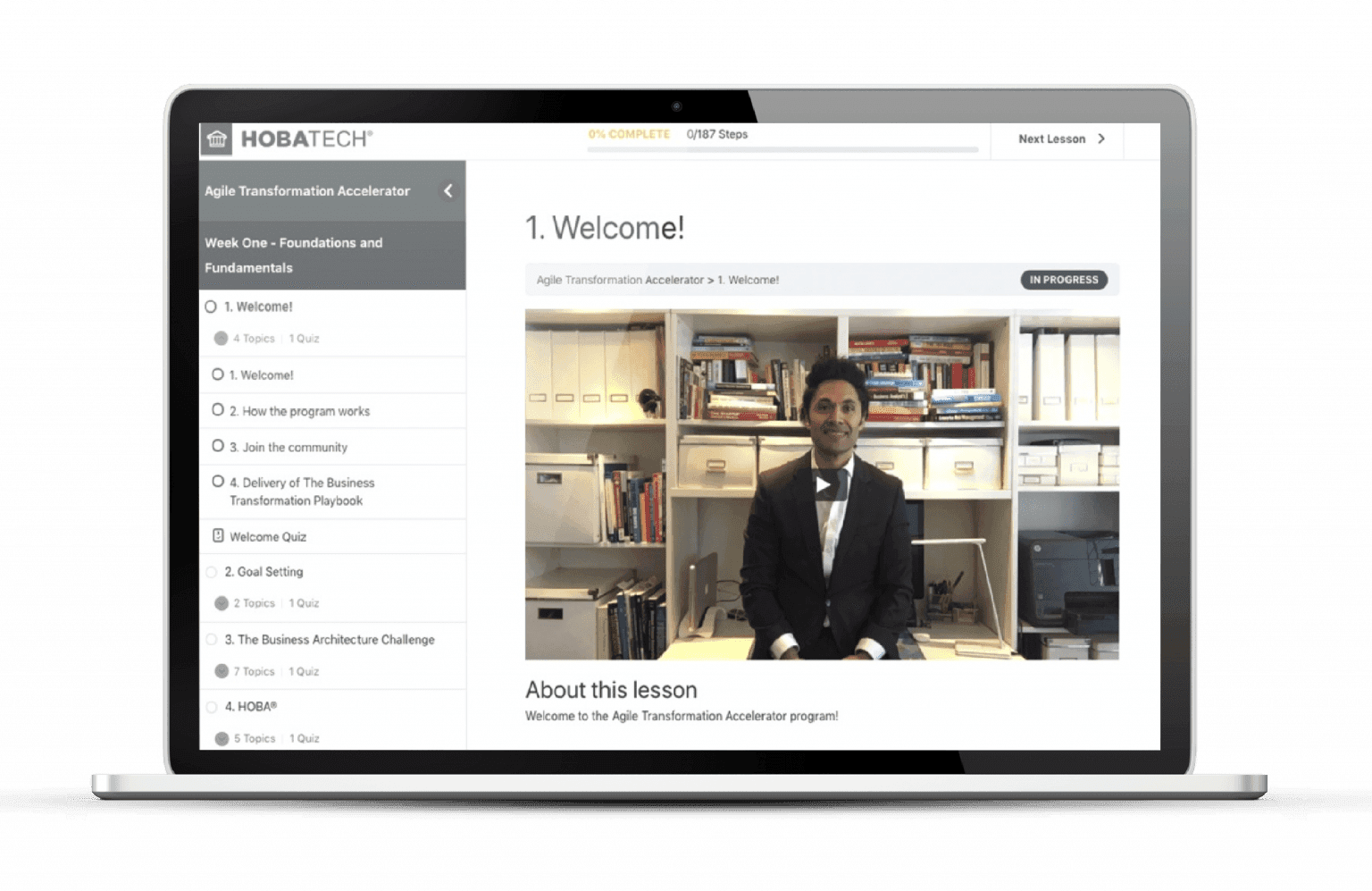
DELIVER YOUR BUSINESS TRANSFORMATION.
🚀 "The real question with AI isn’t what tool to use, it’s what business problem you’re solving. Strategy comes first, technology follows" 🎯🤖 #HOBAtech #AIstrategy #BusinessTransformation
Heath Gascoigne Tweet
About HOBA Tech
If this resonated with you, discover how to make Business Transformation a reality—with less stress, fewer resources, and faster results. Explore our award-winning agile Business Transformation Framework, trusted by organizations worldwide, from the UK Government and FTSE-100 companies to innovative start-ups. Ready to begin your transformation journey? Start here.
Curious why The Business Transformation Playbook is hailed as the “Business Transformation Bible”? See what readers are saying in the Amazon reviews.
We’d love to hear your thoughts! Let us know in the comments what stood out to you or what topics you’d like us to cover next. If you found this valuable, share it with others who could benefit!
Thank you for reading, and here’s to your transformation success!
Sincerely,

Heath Gascoigne
P.S. If you want to join our Business Transformator community of 2,000+ like-minded Business Transformators, join the community on the Business Transformator Facebook Group here.
P.P.S. If you want to learn more about business transformation, check out The Business Transformation Playbook.

Heath Gascoigne
Hi, I'm Heath, the founder of HOBA TECH and host of The Business Transformation Podcast. I help Business Transformation Consultants, Business Designers and Business Architects transform their and their clients' business and join the 30% club that succeed.
TRANSFORM YOUR
ORGANIZATION
WITH THIS SIMPLE PROCESS
WE OFFER THE TRAINING FOR PEOPLE TO GO AND LEARN THE SKILLS NEEDED TO ACHIEVE THE SAME RESULTS AS ACHIEVED IN THIS CASE STUDY.
ENJOYING THIS POST?
GET THE NEXT ONE
Subscribe to our newsletter and get the latest insights delivered straight to your inbox.
" Just read: "The 4+1 Process to AI: Why Elimination Comes Before Automation | HOBA" — incredible insights on business transformation. 🚀 "